Services
Mobile Apps in 2026: Which Technologies and Trends Are Changing Business, and What to Consider During Development
09.09.2026 14:00

Mobile Apps in 2026: Which Technologies and Trends Are Changing Business, and What to Consider During Development

Just a few years ago, a mobile app for business was often perceived as an additional channel of communication with the customer. Today, the situation has changed dramatically. For online stores, service companies, restaurants, educational platforms, SaaS products, loyalty programs, and many other businesses, a mobile app can be a full-fledged part of the digital product.

Users expect that the action they need will be completed quickly: find a product, place an order, pay for a service, receive a personalized offer, check bonuses, book a training session, complete an online course, or get a message from the company.

That is why mobile app development today is not just writing code for iOS and Android. It is comprehensive work on a digital product that must be connected to the company’s business processes, CRM, ERP, website, payment systems, loyalty programs, analytics, and other services.

The Webstick Global team develops mobile solutions for business and creates products focused not only on technological implementation but also on solving specific business tasks. On the mobile app development page of Webstick Global, you can learn about the company’s approach to creating mobile products.

A Mobile App Is No Longer a “Second Website”

One of the most important changes in the approach to mobile development is that a good app should no longer be simply a copy of a website.

A website answers the question: what can the user learn or do right now?
A mobile app should answer a different question:
why should the user return to it tomorrow?

This is where the value of mobile technologies comes into play. An app can use push notifications, biometric authentication, geolocation, the smartphone camera, local data storage, mobile payments, and other device capabilities.

For example, in the Biksico case — development of a mobile app for store management — the mobile product was focused not simply on viewing information, but on managing the processes of an online store.

This is a fundamentally different approach: the app becomes a business tool.

Trend #1. Artificial Intelligence Moves from Demonstration to Real Functionality

In 2026, it is no longer enough to simply write “AI-powered” in a product presentation.

The main question is different: what specific problem does artificial intelligence solve for the user?

Mobile apps can use AI for:

  • personalized recommendations;
  • analysis of user behavior;
  • automatic text processing;
  • natural language search;
  • creation of personalized content;
  • image recognition;
  • voice scenarios;
  • support automation;
  • prediction of customer needs;
  • data analysis;
  • intelligent navigation within the product.

A particularly interesting direction is on-device AI, when part of the AI functions are performed directly on the smartphone. Google is actively developing local AI capabilities on Android, including models and APIs for processing data without the mandatory transfer of information to a server. This can provide advantages in speed, privacy, and operation with an unstable internet connection.

But AI does not need to be added to an app simply for the sake of a trend.

For example, for an online store, smart search or recommendations can be useful. For an educational product — a personalized learning path. For SaaS — automatic analysis of metrics. For a service company — an AI assistant that shortens the user’s path to the required action.

It is the business scenario, not the technology itself, that should determine the product architecture.

Trend #2. AI Becomes Part of the Way Users Interact with the App

An even more interesting direction is the so-called agentic experiences.

The user is gradually moving from the model:
open the app → find the function → perform several actions
to the model:
set a task → get the result.

Google is already developing Android in the direction of an “intelligence system,” where AI agents can interact with app functions and perform multi-step scenarios. While a significant part of these capabilities is still at early stages, the direction is clear: the app must be ready not only for interaction with a person through a traditional UI, but also for new ways of interaction through AI.

For business, this means the need to think about APIs, structured data, access rights, and business logic already at the architecture stage.

Trend #3. Cross-Platform Development Becomes a Mature Solution

Previously, companies often had to choose between separate development for iOS and Android or the compromises of cross-platform technologies.

Today, the cross-platform approach has matured significantly.

Technologies such as Flutter make it possible to create apps for different platforms on a shared codebase while retaining the ability to build complex interfaces and integrate with platform-specific features.

This is especially relevant for:

  • e-commerce;
  • delivery services;
  • loyalty programs;
  • SaaS products;
  • educational platforms;
  • booking systems;
  • corporate apps;
  • marketplaces;
  • subscription services.

But cross-platform development should not be an end in itself. If a product requires specific work with hardware, complex graphics, or deep integration with a particular platform, the feasibility of the technology must be assessed separately.

The right stack is determined by business requirements, not by the popularity of a particular framework.

Trend #4. Personalization Becomes the Standard

Users are getting used to digital products that “know” their interests.

In a mobile app, personalization can work at different levels:

  • personal offers;
  • individual discounts;
  • product recommendations;
  • personalized content;
  • order history;
  • bonus balance;
  • individual messages;
  • personalized onboarding scenarios;
  • recommendations for the next action.

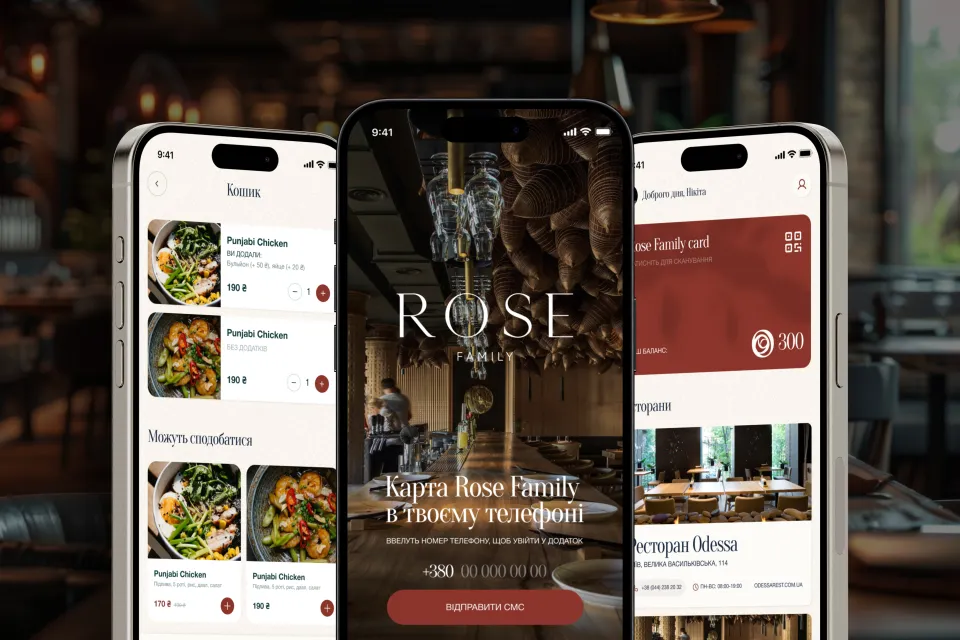
A clear example is the StrikeShop case of developing a mobile app with a multi-level loyalty system.

The app implements loyalty levels, user progress, push notifications, support chat, catalog work, and integration with the OneBox system. Thus, the mobile app became part of the business’s CRM and marketing ecosystem.

This is a good example of why modern mobile app development should start not with the question “what screens do we need?” but with the question:
what user behavior do we want to shape?

Trend #5. Integrations Become Critically Important

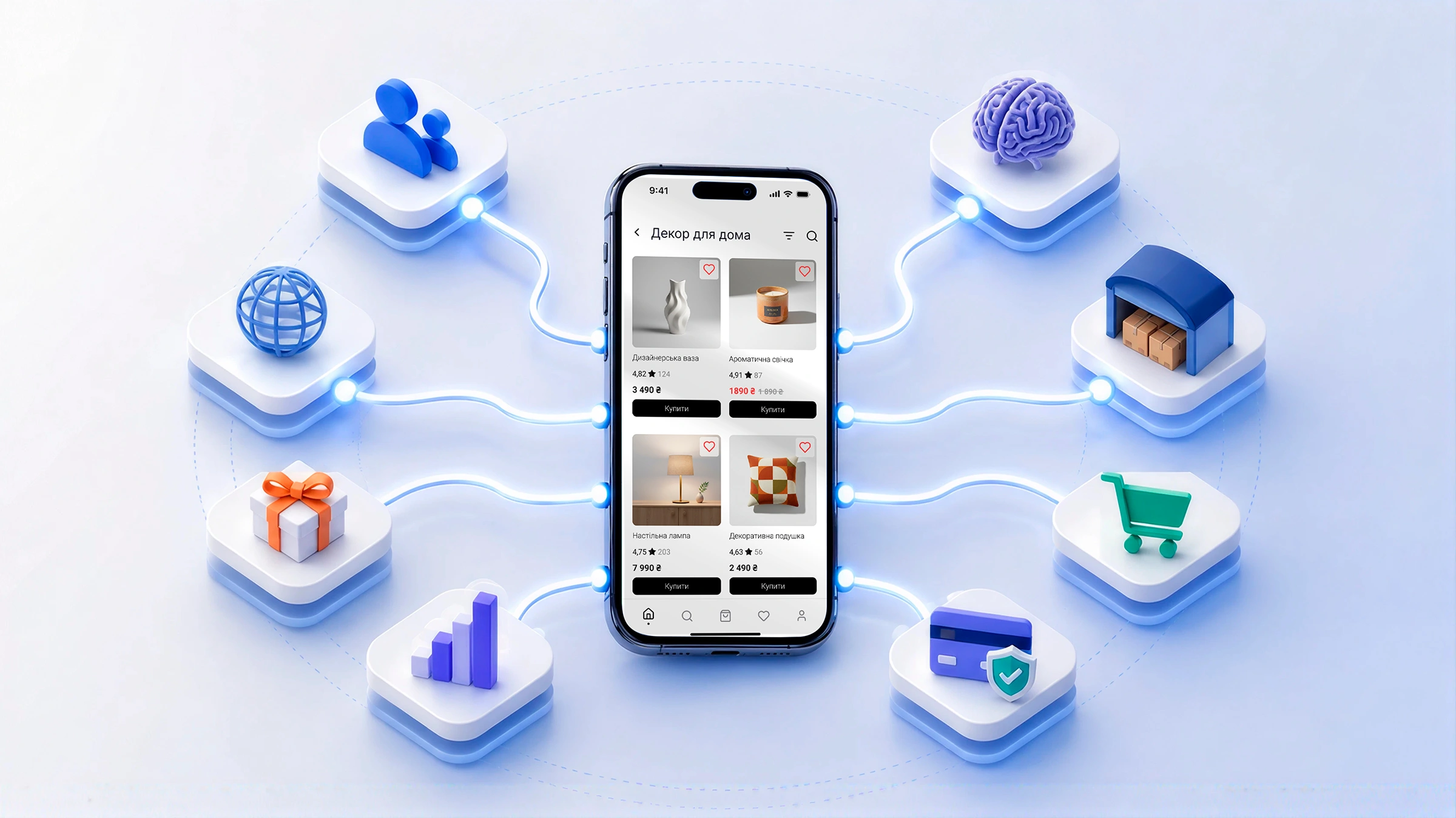
A modern mobile app rarely exists in isolation.

Behind it there may be:

  • CRM;
  • ERP;
  • CMS;
  • product database;
  • warehouse system;
  • payment service;
  • loyalty program;
  • analytics system;
  • delivery service;
  • POS;
  • authorization system;
  • push service;
  • external API.

That is why mobile development is increasingly turning into an integration task.

In the Abonement case — development of a SaaS system — Webstick Global created a system for managing memberships and visits that includes CRM functionality and a mobile app for visitors.

The app allows users to view memberships, pay for training sessions, see the remaining classes, view the schedule, book training sessions, and use an electronic club card.

Integrations with WayForPay, Monobank, and LiqPay for online payments were also implemented.

This is a telling example of how a mobile app can be just one part of a larger digital system.

Trend #6. Privacy-First Becomes Part of UX

The more data a mobile product uses, the more important the issues of confidentiality and security become.

Users want to understand:

  • what data the app collects;
  • why it is needed;
  • where it is stored;
  • who has access to it;
  • whether it is transferred to third-party services.

This is especially important for financial products, medical services, corporate systems, educational platforms, and apps that work with personal data.

Therefore, security must be built into the architecture, not added before release.

Trend #7. UX Becomes a Competitive Advantage

There are more and more functionally similar apps.

Therefore, the advantage often goes to the product that is simpler to use.

Good UX means that the user:

  • quickly understands the purpose of the app;
  • does not get lost in navigation;
  • sees a logical sequence of actions;
  • receives clear feedback;
  • does not waste extra clicks;
  • easily returns to an unfinished action.

That is why UX/UI design cannot be postponed “until later.” It must be developed simultaneously with the product’s business logic.

What Is Important to Consider Before Starting Development?

Before ordering the creation of a mobile app, a business should answer at least seven questions.

  1. Who is the user?
    It is necessary to clearly understand the audience.
  2. What problem does the product solve?
    The app must have concrete value.
  3. What is the key action?
    For example: buy, order, pay, book, learn, manage.
  4. Which systems need to be integrated?
    This can significantly affect the architecture.
  5. Are both iOS and Android needed?
    In most business products — yes, but the technological approach must be determined separately.
  6. What features are needed in the first version?
    It is necessary to separate the MVP from the features of the second stage.
  7. How will success be measured?
    The number of downloads is far from always the right metric. For business, repeat purchases, retention, average check, number of orders, or user activity may be more important.

How Webstick Global Helps Businesses Create Mobile Products

Professional mobile app development is work not only for programmers. A successful product requires a combination of business analysis, UX/UI, frontend and backend development, testing, DevOps, integrations, and ongoing support.

Webstick Global has experience creating mobile products for various business scenarios. On the mobile app development service page, information about the company’s approach and completed projects is presented.

The team works with mobile development, and among the technologies Webstick Global uses is Flutter, among others. The company also has experience in creating CRM, SaaS, web products, and integrated digital solutions.

Conclusion

A mobile app in 2026 is no longer just an icon on a smartphone screen.

It is a point of contact between the customer and the business, a sales tool, a communication channel, a CRM element, a loyalty tool, and sometimes even a full-fledged operating system for part of the business processes.

AI, personalization, cross-platform development, integrations, security, and high-quality UX will determine the competitiveness of mobile products in the coming years.

But the main trend remains unchanged: technology must work for business results.

If a company needs not a template app, but a well-thought-out digital product, the Webstick Global team can help go through the entire path — from idea formation and architecture to development, integration, testing, and launch.
Other news

From idea to the App Store: turnkey mobile app development
From idea to the App Store: what really happens during turnkey mobile app development

For many entrepreneurs, mobile app development looks roughly like this:

“We describe the idea. A team of programmers writes the code. A few months later the finished app appears on the App Store and Google Play.”

In practice, there are dozens of stages between the idea and the published product.

If even one of them is skipped, the project can run into serious problems.

You can end up with a beautiful interface that no one understands.

You can build a functional product that can't be scaled.

You can spend the budget on features that users don't need.

You can develop an app but fail to prepare it for real-world load.

That is why turnkey mobile app development is not just programming.

It is the creation of a full-fledged digital product by the professionals of the Webstick team mobile app development .

Step one: the idea has to become a clear objective

The phrase:

“We want an app like Uber”

or:

“We need a marketplace”

is not a technical specification.

At the start you need to understand:

  • who the user is;

  • what problem they are solving;

  • how they solve it now;

  • why the existing solutions aren't good enough;

  • what outcome the business needs to achieve.

For example, a “delivery app” can mean completely different products.

It could be:

  • a customer app;

  • a courier app;

  • a restaurant app;

  • an admin panel;

  • a routing system;

  • an order management system;

  • a settlement system.

So the team's first task is to turn the idea into a product structure.

Step two: research and shaping the concept

Before design and development, you need to understand how the app will work.

The following are created:

  • user scenarios;

  • user roles;

  • a feature map;

  • the navigation logic;

  • the data structure;

  • the core business processes.

For example, in a booking service you need to define:

  1. who creates the service;

  2. who searches for it;

  3. how a booking is made;

  4. who confirms the order;

  5. how payment is processed;

  6. what happens in the event of a cancellation;

  7. which notifications the user receives.

Each of these questions affects the product's architecture.

Step three: MVP

One of the hardest tasks is to understand what you should not build right away.

An entrepreneur often wants to include everything in the first version:

  • a loyalty program;

  • ratings;

  • a chat;

  • recommendations;

  • social features;

  • complex analytics;

  • dozens of integrations.

But the first version has to answer the main question:

“Does the core business hypothesis work?”

If the app solves one key problem, that may be enough for the first launch.

An MVP lets you:

  • test the idea faster;

  • get real feedback;

  • understand user behavior;

  • reduce risks;

  • avoid investing right away in functionality no one needs.

Step four: UX

The user doesn't think about the backend.

They think:

“How can I do this faster?”

UX design is responsible for the logic of the interaction.

You need to understand:

  • where the user ends up after launching the app;

  • how they will find the feature they need;

  • which actions are the main ones;

  • where an error might occur;

  • which steps can be removed.

Good UX often means not adding features, but removing them.

The fewer unnecessary actions are required to reach the result, the higher the chance that the user will complete the scenario.

Step five: UI design

After the logic, the visual system is created.

The following are defined:

  • colors;

  • typography;

  • components;

  • buttons;

  • forms;

  • cards;

  • error states;

  • empty states;

  • loading screens;

  • animations.

It is important to understand: mobile app design is not just about beautiful images.

It has to account for:

  • screen size;

  • the specifics of different platforms;

  • ease of use with a finger;

  • accessibility;

  • contrast;

  • how quickly information is perceived.

Step six: architecture

This is the stage the user never sees.

But this is exactly where the foundation of the product is laid.

The architecture defines:

  • how the app communicates with the server;

  • where data is stored;

  • how authentication works;

  • how errors are handled;

  • how the system will scale;

  • how new features will be added.

Poor architecture may let you build the first version quickly.

But a year later, adding each new feature turns into a problem.

Good architecture allows the product to grow.

Step seven: backend

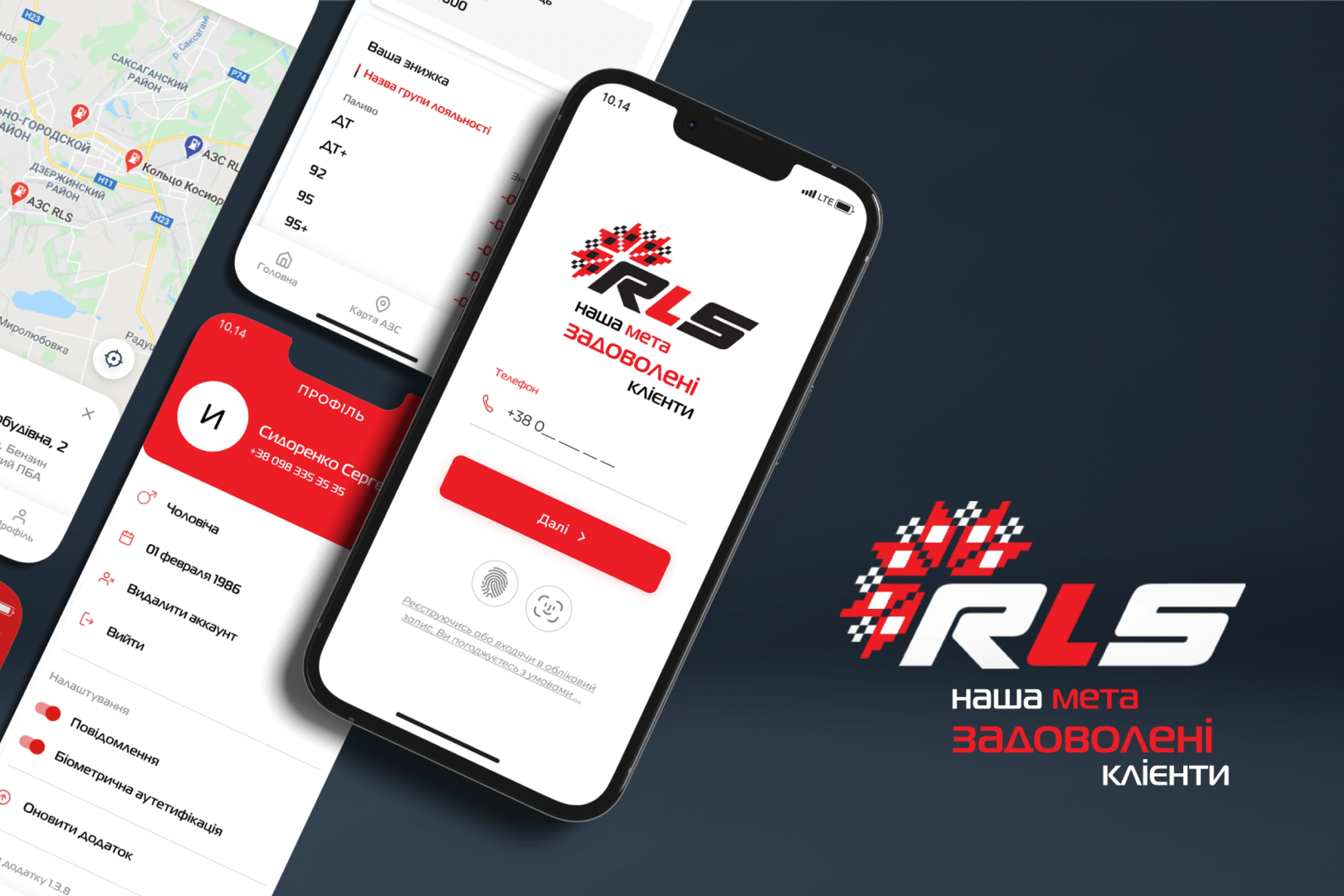
A mobile app is just an interface — for example, as in the app the RLS gas station app case study .

Behind it there is usually a large system.

The backend can be responsible for:

  • users;

  • orders;

  • payments;

  • catalogs;

  • roles;

  • subscriptions;

  • notifications;

  • analytics;

  • integrations.

For example, a user taps the “Place order” button.

On the screen, a single action takes place.

But internally the system has to:

  1. verify the user;

  2. check product availability;

  3. calculate the cost;

  4. create the order;

  5. initiate payment;

  6. send a notification;

  7. update the status;

  8. pass the information to other participants in the process.

That is why a mobile app cannot be considered separately from the backend system.

Step eight: integrations

A modern app rarely exists in isolation.

It may interact with:

  • payment systems;

  • CRM;

  • ERP;

  • maps;

  • analytics systems;

  • authentication services;

  • email platforms;

  • SMS providers;

  • external APIs;

  • devices.

Each integration adds requirements to the architecture and to testing.

Step nine: development

After the requirements, design, and architecture are prepared, coding begins.

But professional development is not a process where:

“The programmers disappear for three months and come back with a finished app.”

The work should happen in iterations.

A part of the functionality is built.

It is tested.

It is demonstrated to the client.

The team gets feedback.

After that, it moves on.

This helps avoid the situation where, a few months in, it turns out the product was built differently from what the business expected.

Step ten: testing

An app may work on one phone and fail to work correctly on another.

That is why the following are tested:

  • different screen sizes;

  • operating system versions;

  • authentication;

  • payments;

  • push notifications;

  • an unstable internet connection;

  • user errors;

  • password recovery;

  • performance;

  • security.

Testing should check not only the question:

“Does the feature work?”

but also:

“What happens if the user does something unexpected?”

Because real users always do something unexpected.

Step eleven: publishing on the App Store and Google Play

A finished app does not yet mean it is immediately available to millions of users.

You need to:

  • prepare release builds;

  • create developer accounts;

  • prepare descriptions;

  • upload screenshots;

  • configure age ratings;

  • prepare a privacy policy;

  • pass the platforms' review.

After publishing, the work doesn't end.

On the contrary — the most important stage begins.

What happens after launch?

After the release, you need to analyze:

  • the number of downloads;

  • user activity;

  • conversion;

  • drop-offs;

  • popular features;

  • bugs;

  • reviews.

The data shows how people actually use the product.

Sometimes a feature the team spent months on is barely used.

And a simple feature that was considered secondary becomes the main reason users come back.

That is why a mobile app is a living product.

Turnkey development: what it means in practice

When a company orders turnkey mobile app development, it gets more than just code.

The full process can include:

  • idea analysis;

  • business analysis;

  • design;

  • UX/UI design;

  • mobile frontend development;

  • backend;

  • API;

  • integrations;

  • testing;

  • DevOps;

  • publishing;

  • technical support;

  • further development.

It is precisely this comprehensive approach that makes it possible to create not just working apps, but digital products ready for real use and scaling.

Conclusion

The path from idea to the App Store or Google Play is far more complex than it seems at first glance.

A successful mobile app is the result of work by more than just programmers.

It is a combination of:

  • business analysis;

  • product strategy;

  • UX/UI;

  • mobile development;

  • backend;

  • testing;

  • infrastructure;

  • analytics.

At Webstick, we build turnkey mobile apps mobile app development  — from the very first idea and design through launch and the product's further development.

If you have a mobile app idea, you don't have to turn it into a huge technical specification straight away.

First you need to understand what problem the product solves, who it is being built for, and how it can be validated with real users as quickly as possible.

And only after that — build the technology that will help this idea become a full-fledged digital product.

Flutter or native development: choosing the technology for your app
Flutter or native development? How to choose the technology for your mobile app and not overpay

You've decided to build a mobile app, and the next question usually sounds like this: “Do we need an iOS developer, an Android developer, or Flutter?”

At first glance it's a technical question. In reality, it's a business decision that determines:

  • the project budget;

  • the speed of going to market;

  • the cost of maintenance;

  • how quickly new features can be added;

  • the product's architecture;

  • the potential for future scaling.

So choosing a technology just because “it's trendy right now” is a poor strategy.

Three main approaches to development

Option 1. Native iOS development

The app is built specifically for the Apple ecosystem. Advantages:

  • maximum integration with iOS;

  • access to new platform capabilities;

  • high performance;

  • the ability to use specialized device features.

The drawback is obvious: if the business also needs Android, separate development will be required.

Option 2. Native Android development

The app is built specifically for Android. Advantages:

  • deep integration with the platform;

  • high performance;

  • full access to Android-specific capabilities.

But if an iOS version is needed, a second codebase and a separate development cycle appear.

Option 3. Cross-platform development

In this case, a single product is built that works on several operating systems. One of the most popular tools for this approach is Flutter. It's often chosen by companies that need to launch an app for both iOS and Android at once, without building two fully independent products.

Why businesses choose cross-platform development

The main reason isn't just cost savings — it's synchronization. Imagine a company developing an app natively. The iOS team implements a new feature, after which the Android team has to:

  • study the requirements;

  • re-implement the feature;

  • test it;

  • fix the bugs;

  • release an update.

With a cross-platform approach, a significant part of the logic lives in a single codebase, which simplifies development, testing, maintenance, and the product's growth.

Where Flutter is especially effective

Flutter is a good fit for a wide range of business apps:

  • e-commerce;

  • marketplaces;

  • delivery services;

  • fintech products;

  • enterprise apps;

  • booking platforms;

  • subscription services;

  • educational apps;

  • wellness and fitness products;

  • management systems;

  • startups.

The cross-platform approach is especially effective where the product's core value lies not in unique operating-system technology, but in business logic and user experience — as, for example, in the StrikeShop loyalty app case study.

Saving money isn't “doing it as cheaply as possible”

There's an important difference between optimizing a budget and trying to save as much as possible. A poor strategy: “Let's pick the cheapest technology.” A good strategy: “Let's pick the technology that lets us build the product effectively and maintain it in the future.”

If an app needs to work on two platforms, cross-platform development can reduce the amount of duplicated work. But that doesn't mean the app will automatically cost half as much — in any case you still need to build:

  • the business logic;

  • the backend;

  • the API;

  • the design;

  • the integrations;

  • the testing;

  • the authorization system;

  • the analytics;

  • the infrastructure.

The savings come primarily from the fact that a significant part of the mobile development can be shared.

Why a single codebase is a strategic advantage

Imagine a product with 200 features. With two fully independent apps, every change has to be implemented and tested twice. That means more time, more cost, and more potential divergence between platforms: an iPhone user gets one behavior, an Android user another. After a few years the two apps can start evolving in different directions, whereas a single technology base helps keep the product coherent.

But when is native development better?

Cross-platform development isn't a universal answer to every question. A native approach may be better if the app:

  • makes heavy use of platform-specific capabilities;

  • works with unique hardware;

  • requires the deepest possible optimization;

  • uses complex graphics technologies;

  • is part of a specialized ecosystem;

  • needs to use new operating-system features as soon as they're released.

That's why choosing a technology always starts with analyzing the requirements. There's no universal answer — “Flutter is always better” or “Native is always better” — the right question is: “Which approach is optimal for this specific product?”

Technology is only part of the result

Even the most modern technology won't save a poor product. An app can be built with Flutter, Swift, Kotlin, React Native, or any other modern stack. But if:

  • the user doesn't understand the interface;

  • the ordering process is too complicated;

  • the app runs slowly;

  • there's no clear value;

  • there's no analytics;

  • the architecture is poorly thought out,

— the technology alone won't deliver a business result. That's why successful development requires several competencies at once.

What a development team should have

Product thinking

The team should understand why each feature is being built. Not just “add a button,” but “what user problem does this button solve?”

UX/UI

The app should be convenient: a user shouldn't have to study a manual to figure out how to place an order or book a service.

Mobile development

You need specialists who understand the specifics of mobile platforms.

Backend development

A mobile app is only part of the product. Most serious projects have:

  • a server;

  • a database;

  • an API;

  • authorization;

  • payments;

  • integrations;

  • analytics.

QA

The app has to work across different devices, operating-system versions, and screen sizes.

DevOps

You need to provide infrastructure, automated builds, environments, monitoring, releases, and security.

That's exactly why turnkey mobile app development isn't the job of a single programmer.

What should a startup choose?

For a startup, the main resource is speed. Until the product is validated by the market, spending too long building the perfect system can be dangerous. In most cases an effective strategy looks like this:

  1. formulate a hypothesis;

  2. define the MVP;

  3. build a prototype;

  4. develop the first version;

  5. gather feedback;

  6. study user behavior;

  7. grow the product based on data.

Cross-platform development often makes it possible to reach the market faster with an app for several platforms at once.

What should a large business choose?

Here the question is more complex. A large company may have:

  • existing IT infrastructure;

  • in-house teams;

  • complex systems;

  • a large number of users;

  • security requirements;

  • numerous integrations.

In that case, the decision should be made after a technical audit: sometimes Flutter will be optimal, sometimes native development, and sometimes a combination of technologies.

How to avoid the wrong choice

Before starting development, it's worth answering seven questions:

  1. Which platforms are needed at launch?

  2. How complex is the product's logic?

  3. Is integration with device-specific features required?

  4. How quickly do you need to reach the market?

  5. What budget is planned for growth?

  6. Who will maintain the product in two or three years?

  7. What features should appear in the future?

The last question is especially important, because mobile app development isn't a one-off project — it's building a technology platform for the future of the business.

Conclusion

Choosing between Flutter and native development isn't a contest of technologies — it's a choice of strategy. For one product it's reasonable to build two separate native apps; for another, to use a cross-platform approach. The key is not to choose a technology in isolation from the product.

Webstick develops mobile apps for iOS and Android, applying the approach that fits the specific goals of each project. In many cases, cross-platform development with Flutter makes it possible to speed up building the product, reduce duplicated work, and simplify further growth.

The right technology isn't the one everyone talks about the most — it's the one that helps a business build a product people will actually use, faster and more effectively.

The mobile app your business does not need
The mobile app you don't need: how to tell whether your business really needs its own app

Just a few years ago, a mobile app was considered an almost mandatory attribute of any large business. A retailer had to have its own app, a bank even more so, and a delivery service — without question.

But today the situation has changed.

The mere fact of having a mobile app is no longer a competitive advantage.

A user won't install an app simply because a company spent money building it. They will download it only if the app solves a specific problem: helps them buy faster, place an order more conveniently, manage a service more easily, receive a personal offer, or use a feature that can't be fully delivered through an ordinary website.

That is why the main question before starting development is not:

“How much does it cost to develop a mobile app?”

It is far more important to ask:

“What business problem should the app solve, and why will the user keep coming back to it?”


A mobile app is not a shrunken version of a website

One of the most common mistakes is to treat a mobile app as a website that simply needs to be “moved into the phone”.

In reality, an app can be a completely independent digital product. You can explore the development options here:

mobile app development

A website usually answers the question:

“What can the user learn or do right now?”

A mobile app should answer a different question:

“Why should the user come back here again?”

Mobile apps offer capabilities an ordinary website does not have.

These include the following functionality:

  • push notifications;

  • geolocation;

  • camera access;

  • biometric authentication;

  • integration with payment systems;

  • working with Bluetooth and other devices;

  • calendar access;

  • a personalized user experience;

  • on-device data storage;

  • the ability for certain features to work even on an unstable internet connection.

That is why a mobile app should be designed not as a copy of a website, but as a standalone digital product.


Five signs that a business really does need a mobile app

1. The user interacts with your service regularly

If a customer turns to your company once every few years, they most likely won't need a dedicated app.

But if the user:

  • places orders regularly;

  • tracks delivery status;

  • books services;

  • manages finances;

  • works out;

  • consumes content;

  • uses a loyalty program;

  • works with a corporate system,

then a mobile app as a service:

mobile app development

can significantly simplify that interaction.

The higher the frequency of use, the higher the potential value of a mobile app.


2. Personalization matters to the business

A website can also display personalized content. However, a mobile app makes it possible to go much deeper with personalization.

For example:

our case studies

The user can see:

  • personal offers;

  • order history;

  • individual recommendations;

  • accumulated bonuses;

  • their own metrics;

  • saved settings;

  • personalized content;

  • notifications tied specifically to their actions.

As a result, the app becomes not just a communication channel, but the user's personal digital account.


3. The business depends on repeat actions

Consider an online store.

A user may first land on the site through Google, find the product they need, and make a purchase. But if the company wants them to come back, a mobile app can become a separate channel for retaining the customer.

For example:

  • a push notification about a personal discount;

  • a reminder about an unfinished order;

  • a notification that a desired product is back in stock;

  • delivery status information;

  • a personal loyalty program.

All of this turns an app into a tool for regular interaction with the customer.

You can order mobile app development here:

mobile app development


4. You need to use the capabilities of the smartphone

Some digital products simply cannot be delivered conveniently through a browser alone.

For example:

  • delivery services use GPS;

  • fitness apps work with sensors and wearable devices;

  • marketplaces use push notifications;

  • identification apps use the camera and biometrics;

  • corporate solutions may work with Bluetooth hardware;

  • travel apps use geolocation and offline functionality.

In such cases, a mobile app becomes not just an add-on, but the primary interface of the product.


5. You are building a digital product, not just selling a service

For a startup, a mobile app can become the core of the entire business model.

This is how the following work:

  • marketplace platforms;

  • delivery services;

  • financial products;

  • social networks;

  • educational services;

  • wellness and fitness products;

  • services for finding specialists;

  • booking platforms;

  • SaaS products with a mobile interface.

In this case, mobile app development is no longer just a marketing expense.

It is the creation of the product itself.

When a mobile app can turn out to be a poor investment

Not every business needs its own mobile app.

Sometimes it is far more effective to start with:

  • a well-designed website;

  • a web app;

  • a personal account area;

  • an MVP;

  • a Telegram bot;

  • a CRM integration;

  • automation of internal processes.

The main mistake is to immediately commission a complex mobile app without checking whether anyone will actually use it.

A company can spend a significant budget and run into the following problems:

  • users don't want to download the app;

  • the frequency of use is too low;

  • the app simply duplicates the website;

  • there aren't enough customers;

  • there is no clear reason to return to the app;

  • the first version is overloaded with functionality.

That is why development should not start with screen design.

It should start with an understanding of the product.


What should happen before the first line of code is written

Professional mobile app development:

mobile app development

at Webstick begins with analysis.

At this stage you need to define:


Target audience

Who will use the app?

What needs do these people have?

How do they solve their problem today?

What will make them choose your product specifically?


The core scenario

What does the user's journey look like?

For example:

  • the user downloads the app;

  • creates an account;

  • selects a service;

  • places an order;

  • receives notifications;

  • tracks the status;

  • performs a repeat action.

If this journey can't be described clearly, the product hasn't been thought through enough yet.


An MVP is not a “bad first version”

An MVP is a minimal product that lets you test the main business hypothesis.

If the core idea of the app is ordering a service, you don't necessarily need to build straight away:

  • a complex bonus system;

  • dozens of notification types;

  • a built-in social network;

  • advanced analytics;

  • dozens of integrations.

First you need to make sure that users actually want to order the service through the app.

An MVP lets you test the idea faster, get feedback from users, and understand which features are really needed for the product's further development.


Native or cross-platform development?

Once the product is defined, a technical question arises.

Should you build separate apps for iOS and Android, or use a cross-platform approach?

In some projects, native development may be the optimal solution.

Especially if the app requires deep integration with a specific operating system or specialized hardware.

However, for many business products, cross-platform development makes it possible to:

  • release the product faster;

  • reduce development costs;

  • use a single codebase;

  • simplify further maintenance;

  • evolve the iOS and Android versions in sync.

That is why Flutter is used in many modern projects where a single product needs to be built for several platforms at once.


What turnkey mobile app development looks like

Professional development usually involves several stages.


1. Idea analysis

The business objectives, target audience, and core user scenarios are defined.

At this stage it is important to understand:

  • what problem the app solves;

  • who its user is;

  • what value it creates;

  • why the customer will come back.


2. Defining the requirements

A detailed description of the functionality is created.

The following are defined:

  • the core features;

  • user scenarios;

  • integrations;

  • security requirements;

  • the technical architecture.


3. UX/UI design

The user journey and the visual interface are designed.

This includes:

  • the screen structure;

  • the navigation logic;

  • the interface design;

  • the convenience of the user's interaction with the product.

Good design is not only about a nice appearance.

Above all, it is a clear and convenient user experience.


4. Architecture

The interaction between the following is defined:

  • the mobile app;

  • the server side;

  • the database;

  • the API;

  • external services.

This stage lays the foundation for the product's future stability and scalability.


5. Development

The following are built:

  • the mobile frontend;

  • the backend;

  • the API;

  • the necessary integrations.

Developers implement the app's functionality according to the approved architecture and project requirements.


6. Testing

The following are checked:

  • functionality;

  • performance;

  • security;

  • device compatibility;

  • stability;

  • the correctness of payments and notifications.

Quality testing makes it possible to catch problems before the app reaches real users.


7. Publishing

The app is prepared for release on the App Store and Google Play.

For example, one of our completed projects:

the Abonement app case study

demonstrates the development of a mobile app with a loyalty system.

The publishing stage includes:

  • preparing the required materials;

  • setting up developer accounts;

  • meeting the platforms' requirements;

  • releasing the app to users.


8. Support and further development

After launch, the real life of the product begins.

You start to get:

  • user reviews;

  • new ideas;

  • analytics;

  • bugs;

  • requests for new features.

A good mobile app evolves continuously.

After launch, the team analyzes user behavior and improves the product based on real data.

Conclusion

You shouldn't start development with the question:

“How much does mobile app development cost?”

You need to start with a different question:

“What value will the app create for the business and the user?”

Once the answer is clear, the technical implementation becomes much simpler.

A mobile app should be more than just an additional sales channel or a good-looking digital product.

It should solve a specific problem:

  • simplify the customer's interaction with the business;

  • shorten the path to a purchase;

  • make the service more convenient to use;

  • increase the number of repeat actions;

  • build loyalty;

  • create a new communication channel.

That is why a successful app starts not with building interfaces, but with an understanding of users and business goals.

The mobile app your business does not need
The mobile app you don't need: how to tell whether your business really needs its own app

Just a few years ago, a mobile app was considered an almost mandatory attribute of any large business. A retailer had to have its own app, a bank even more so, and a delivery service — without question.

But today the situation has changed.

The mere fact of having a mobile app is no longer a competitive advantage.

A user won't install an app simply because a company spent money building it. They will download it only if the app solves a specific problem: helps them buy faster, place an order more conveniently, manage a service more easily, receive a personal offer, or use a feature that can't be fully delivered through an ordinary website.

That is why the main question before starting development is not:

“How much does it cost to develop a mobile app?”

It is far more important to ask:

“What business problem should the app solve, and why will the user keep coming back to it?”


A mobile app is not a shrunken version of a website

One of the most common mistakes is to treat a mobile app as a website that simply needs to be “moved into the phone”.

In reality, an app can be a completely independent digital product. You can explore the development options here:

mobile app development

A website usually answers the question:

“What can the user learn or do right now?”

A mobile app should answer a different question:

“Why should the user come back here again?”

Mobile apps offer capabilities an ordinary website does not have.

These include the following functionality:

  • push notifications;

  • geolocation;

  • camera access;

  • biometric authentication;

  • integration with payment systems;

  • working with Bluetooth and other devices;

  • calendar access;

  • a personalized user experience;

  • on-device data storage;

  • the ability for certain features to work even on an unstable internet connection.

That is why a mobile app should be designed not as a copy of a website, but as a standalone digital product.


Five signs that a business really does need a mobile app

1. The user interacts with your service regularly

If a customer turns to your company once every few years, they most likely won't need a dedicated app.

But if the user:

  • places orders regularly;

  • tracks delivery status;

  • books services;

  • manages finances;

  • works out;

  • consumes content;

  • uses a loyalty program;

  • works with a corporate system,

then a mobile app as a service:

mobile app development

can significantly simplify that interaction.

The higher the frequency of use, the higher the potential value of a mobile app.


2. Personalization matters to the business

A website can also display personalized content. However, a mobile app makes it possible to go much deeper with personalization.

For example:

our case studies

The user can see:

  • personal offers;

  • order history;

  • individual recommendations;

  • accumulated bonuses;

  • their own metrics;

  • saved settings;

  • personalized content;

  • notifications tied specifically to their actions.

As a result, the app becomes not just a communication channel, but the user's personal digital account.


3. The business depends on repeat actions

Consider an online store.

A user may first land on the site through Google, find the product they need, and make a purchase. But if the company wants them to come back, a mobile app can become a separate channel for retaining the customer.

For example:

  • a push notification about a personal discount;

  • a reminder about an unfinished order;

  • a notification that a desired product is back in stock;

  • delivery status information;

  • a personal loyalty program.

All of this turns an app into a tool for regular interaction with the customer.

You can order mobile app development here:

mobile app development


4. You need to use the capabilities of the smartphone

Some digital products simply cannot be delivered conveniently through a browser alone.

For example:

  • delivery services use GPS;

  • fitness apps work with sensors and wearable devices;

  • marketplaces use push notifications;

  • identification apps use the camera and biometrics;

  • corporate solutions may work with Bluetooth hardware;

  • travel apps use geolocation and offline functionality.

In such cases, a mobile app becomes not just an add-on, but the primary interface of the product.


5. You are building a digital product, not just selling a service

For a startup, a mobile app can become the core of the entire business model.

This is how the following work:

  • marketplace platforms;

  • delivery services;

  • financial products;

  • social networks;

  • educational services;

  • wellness and fitness products;

  • services for finding specialists;

  • booking platforms;

  • SaaS products with a mobile interface.

In this case, mobile app development is no longer just a marketing expense.

It is the creation of the product itself.

When a mobile app can turn out to be a poor investment

Not every business needs its own mobile app.

Sometimes it is far more effective to start with:

  • a well-designed website;

  • a web app;

  • a personal account area;

  • an MVP;

  • a Telegram bot;

  • a CRM integration;

  • automation of internal processes.

The main mistake is to immediately commission a complex mobile app without checking whether anyone will actually use it.

A company can spend a significant budget and run into the following problems:

  • users don't want to download the app;

  • the frequency of use is too low;

  • the app simply duplicates the website;

  • there aren't enough customers;

  • there is no clear reason to return to the app;

  • the first version is overloaded with functionality.

That is why development should not start with screen design.

It should start with an understanding of the product.


What should happen before the first line of code is written

Professional mobile app development:

mobile app development

at Webstick begins with analysis.

At this stage you need to define:


Target audience

Who will use the app?

What needs do these people have?

How do they solve their problem today?

What will make them choose your product specifically?


The core scenario

What does the user's journey look like?

For example:

  • the user downloads the app;

  • creates an account;

  • selects a service;

  • places an order;

  • receives notifications;

  • tracks the status;

  • performs a repeat action.

If this journey can't be described clearly, the product hasn't been thought through enough yet.


An MVP is not a “bad first version”

An MVP is a minimal product that lets you test the main business hypothesis.

If the core idea of the app is ordering a service, you don't necessarily need to build straight away:

  • a complex bonus system;

  • dozens of notification types;

  • a built-in social network;

  • advanced analytics;

  • dozens of integrations.

First you need to make sure that users actually want to order the service through the app.

An MVP lets you test the idea faster, get feedback from users, and understand which features are really needed for the product's further development.


Native or cross-platform development?

Once the product is defined, a technical question arises.

Should you build separate apps for iOS and Android, or use a cross-platform approach?

In some projects, native development may be the optimal solution.

Especially if the app requires deep integration with a specific operating system or specialized hardware.

However, for many business products, cross-platform development makes it possible to:

  • release the product faster;

  • reduce development costs;

  • use a single codebase;

  • simplify further maintenance;

  • evolve the iOS and Android versions in sync.

That is why Flutter is used in many modern projects where a single product needs to be built for several platforms at once.


What turnkey mobile app development looks like

Professional development usually involves several stages.


1. Idea analysis

The business objectives, target audience, and core user scenarios are defined.

At this stage it is important to understand:

  • what problem the app solves;

  • who its user is;

  • what value it creates;

  • why the customer will come back.


2. Defining the requirements

A detailed description of the functionality is created.

The following are defined:

  • the core features;

  • user scenarios;

  • integrations;

  • security requirements;

  • the technical architecture.


3. UX/UI design

The user journey and the visual interface are designed.

This includes:

  • the screen structure;

  • the navigation logic;

  • the interface design;

  • the convenience of the user's interaction with the product.

Good design is not only about a nice appearance.

Above all, it is a clear and convenient user experience.


4. Architecture

The interaction between the following is defined:

  • the mobile app;

  • the server side;

  • the database;

  • the API;

  • external services.

This stage lays the foundation for the product's future stability and scalability.


5. Development

The following are built:

  • the mobile frontend;

  • the backend;

  • the API;

  • the necessary integrations.

Developers implement the app's functionality according to the approved architecture and project requirements.


6. Testing

The following are checked:

  • functionality;

  • performance;

  • security;

  • device compatibility;

  • stability;

  • the correctness of payments and notifications.

Quality testing makes it possible to catch problems before the app reaches real users.


7. Publishing

The app is prepared for release on the App Store and Google Play.

For example, one of our completed projects:

the Abonement app case study

demonstrates the development of a mobile app with a loyalty system.

The publishing stage includes:

  • preparing the required materials;

  • setting up developer accounts;

  • meeting the platforms' requirements;

  • releasing the app to users.


8. Support and further development

After launch, the real life of the product begins.

You start to get:

  • user reviews;

  • new ideas;

  • analytics;

  • bugs;

  • requests for new features.

A good mobile app evolves continuously.

After launch, the team analyzes user behavior and improves the product based on real data.

Conclusion

You shouldn't start development with the question:

“How much does mobile app development cost?”

You need to start with a different question:

“What value will the app create for the business and the user?”

Once the answer is clear, the technical implementation becomes much simpler.

A mobile app should be more than just an additional sales channel or a good-looking digital product.

It should solve a specific problem:

  • simplify the customer's interaction with the business;

  • shorten the path to a purchase;

  • make the service more convenient to use;

  • increase the number of repeat actions;

  • build loyalty;

  • create a new communication channel.

That is why a successful app starts not with building interfaces, but with an understanding of users and business goals.

Flutter or native development: choosing the technology for your app
Flutter or native development? How to choose the technology for your mobile app and not overpay

You've decided to build a mobile app, and the next question usually sounds like this: “Do we need an iOS developer, an Android developer, or Flutter?”

At first glance it's a technical question. In reality, it's a business decision that determines:

  • the project budget;

  • the speed of going to market;

  • the cost of maintenance;

  • how quickly new features can be added;

  • the product's architecture;

  • the potential for future scaling.

So choosing a technology just because “it's trendy right now” is a poor strategy.

Three main approaches to development

Option 1. Native iOS development

The app is built specifically for the Apple ecosystem. Advantages:

  • maximum integration with iOS;

  • access to new platform capabilities;

  • high performance;

  • the ability to use specialized device features.

The drawback is obvious: if the business also needs Android, separate development will be required.

Option 2. Native Android development

The app is built specifically for Android. Advantages:

  • deep integration with the platform;

  • high performance;

  • full access to Android-specific capabilities.

But if an iOS version is needed, a second codebase and a separate development cycle appear.

Option 3. Cross-platform development

In this case, a single product is built that works on several operating systems. One of the most popular tools for this approach is Flutter. It's often chosen by companies that need to launch an app for both iOS and Android at once, without building two fully independent products.

Why businesses choose cross-platform development

The main reason isn't just cost savings — it's synchronization. Imagine a company developing an app natively. The iOS team implements a new feature, after which the Android team has to:

  • study the requirements;

  • re-implement the feature;

  • test it;

  • fix the bugs;

  • release an update.

With a cross-platform approach, a significant part of the logic lives in a single codebase, which simplifies development, testing, maintenance, and the product's growth.

Where Flutter is especially effective

Flutter is a good fit for a wide range of business apps:

  • e-commerce;

  • marketplaces;

  • delivery services;

  • fintech products;

  • enterprise apps;

  • booking platforms;

  • subscription services;

  • educational apps;

  • wellness and fitness products;

  • management systems;

  • startups.

The cross-platform approach is especially effective where the product's core value lies not in unique operating-system technology, but in business logic and user experience — as, for example, in the StrikeShop loyalty app case study.

Saving money isn't “doing it as cheaply as possible”

There's an important difference between optimizing a budget and trying to save as much as possible. A poor strategy: “Let's pick the cheapest technology.” A good strategy: “Let's pick the technology that lets us build the product effectively and maintain it in the future.”

If an app needs to work on two platforms, cross-platform development can reduce the amount of duplicated work. But that doesn't mean the app will automatically cost half as much — in any case you still need to build:

  • the business logic;

  • the backend;

  • the API;

  • the design;

  • the integrations;

  • the testing;

  • the authorization system;

  • the analytics;

  • the infrastructure.

The savings come primarily from the fact that a significant part of the mobile development can be shared.

Why a single codebase is a strategic advantage

Imagine a product with 200 features. With two fully independent apps, every change has to be implemented and tested twice. That means more time, more cost, and more potential divergence between platforms: an iPhone user gets one behavior, an Android user another. After a few years the two apps can start evolving in different directions, whereas a single technology base helps keep the product coherent.

But when is native development better?

Cross-platform development isn't a universal answer to every question. A native approach may be better if the app:

  • makes heavy use of platform-specific capabilities;

  • works with unique hardware;

  • requires the deepest possible optimization;

  • uses complex graphics technologies;

  • is part of a specialized ecosystem;

  • needs to use new operating-system features as soon as they're released.

That's why choosing a technology always starts with analyzing the requirements. There's no universal answer — “Flutter is always better” or “Native is always better” — the right question is: “Which approach is optimal for this specific product?”

Technology is only part of the result

Even the most modern technology won't save a poor product. An app can be built with Flutter, Swift, Kotlin, React Native, or any other modern stack. But if:

  • the user doesn't understand the interface;

  • the ordering process is too complicated;

  • the app runs slowly;

  • there's no clear value;

  • there's no analytics;

  • the architecture is poorly thought out,

— the technology alone won't deliver a business result. That's why successful development requires several competencies at once.

What a development team should have

Product thinking

The team should understand why each feature is being built. Not just “add a button,” but “what user problem does this button solve?”

UX/UI

The app should be convenient: a user shouldn't have to study a manual to figure out how to place an order or book a service.

Mobile development

You need specialists who understand the specifics of mobile platforms.

Backend development

A mobile app is only part of the product. Most serious projects have:

  • a server;

  • a database;

  • an API;

  • authorization;

  • payments;

  • integrations;

  • analytics.

QA

The app has to work across different devices, operating-system versions, and screen sizes.

DevOps

You need to provide infrastructure, automated builds, environments, monitoring, releases, and security.

That's exactly why turnkey mobile app development isn't the job of a single programmer.

What should a startup choose?

For a startup, the main resource is speed. Until the product is validated by the market, spending too long building the perfect system can be dangerous. In most cases an effective strategy looks like this:

  1. formulate a hypothesis;

  2. define the MVP;

  3. build a prototype;

  4. develop the first version;

  5. gather feedback;

  6. study user behavior;

  7. grow the product based on data.

Cross-platform development often makes it possible to reach the market faster with an app for several platforms at once.

What should a large business choose?

Here the question is more complex. A large company may have:

  • existing IT infrastructure;

  • in-house teams;

  • complex systems;

  • a large number of users;

  • security requirements;

  • numerous integrations.

In that case, the decision should be made after a technical audit: sometimes Flutter will be optimal, sometimes native development, and sometimes a combination of technologies.

How to avoid the wrong choice

Before starting development, it's worth answering seven questions:

  1. Which platforms are needed at launch?

  2. How complex is the product's logic?

  3. Is integration with device-specific features required?

  4. How quickly do you need to reach the market?

  5. What budget is planned for growth?

  6. Who will maintain the product in two or three years?

  7. What features should appear in the future?

The last question is especially important, because mobile app development isn't a one-off project — it's building a technology platform for the future of the business.

Conclusion

Choosing between Flutter and native development isn't a contest of technologies — it's a choice of strategy. For one product it's reasonable to build two separate native apps; for another, to use a cross-platform approach. The key is not to choose a technology in isolation from the product.

Webstick develops mobile apps for iOS and Android, applying the approach that fits the specific goals of each project. In many cases, cross-platform development with Flutter makes it possible to speed up building the product, reduce duplicated work, and simplify further growth.

The right technology isn't the one everyone talks about the most — it's the one that helps a business build a product people will actually use, faster and more effectively.

From idea to the App Store: turnkey mobile app development
From idea to the App Store: what really happens during turnkey mobile app development

For many entrepreneurs, mobile app development looks roughly like this:

“We describe the idea. A team of programmers writes the code. A few months later the finished app appears on the App Store and Google Play.”

In practice, there are dozens of stages between the idea and the published product.

If even one of them is skipped, the project can run into serious problems.

You can end up with a beautiful interface that no one understands.

You can build a functional product that can't be scaled.

You can spend the budget on features that users don't need.

You can develop an app but fail to prepare it for real-world load.

That is why turnkey mobile app development is not just programming.

It is the creation of a full-fledged digital product by the professionals of the Webstick team mobile app development .

Step one: the idea has to become a clear objective

The phrase:

“We want an app like Uber”

or:

“We need a marketplace”

is not a technical specification.

At the start you need to understand:

  • who the user is;

  • what problem they are solving;

  • how they solve it now;

  • why the existing solutions aren't good enough;

  • what outcome the business needs to achieve.

For example, a “delivery app” can mean completely different products.

It could be:

  • a customer app;

  • a courier app;

  • a restaurant app;

  • an admin panel;

  • a routing system;

  • an order management system;

  • a settlement system.

So the team's first task is to turn the idea into a product structure.

Step two: research and shaping the concept

Before design and development, you need to understand how the app will work.

The following are created:

  • user scenarios;

  • user roles;

  • a feature map;

  • the navigation logic;

  • the data structure;

  • the core business processes.

For example, in a booking service you need to define:

  1. who creates the service;

  2. who searches for it;

  3. how a booking is made;

  4. who confirms the order;

  5. how payment is processed;

  6. what happens in the event of a cancellation;

  7. which notifications the user receives.

Each of these questions affects the product's architecture.

Step three: MVP

One of the hardest tasks is to understand what you should not build right away.

An entrepreneur often wants to include everything in the first version:

  • a loyalty program;

  • ratings;

  • a chat;

  • recommendations;

  • social features;

  • complex analytics;

  • dozens of integrations.

But the first version has to answer the main question:

“Does the core business hypothesis work?”

If the app solves one key problem, that may be enough for the first launch.

An MVP lets you:

  • test the idea faster;

  • get real feedback;

  • understand user behavior;

  • reduce risks;

  • avoid investing right away in functionality no one needs.

Step four: UX

The user doesn't think about the backend.

They think:

“How can I do this faster?”

UX design is responsible for the logic of the interaction.

You need to understand:

  • where the user ends up after launching the app;

  • how they will find the feature they need;

  • which actions are the main ones;

  • where an error might occur;

  • which steps can be removed.

Good UX often means not adding features, but removing them.

The fewer unnecessary actions are required to reach the result, the higher the chance that the user will complete the scenario.

Step five: UI design

After the logic, the visual system is created.

The following are defined:

  • colors;

  • typography;

  • components;

  • buttons;

  • forms;

  • cards;

  • error states;

  • empty states;

  • loading screens;

  • animations.

It is important to understand: mobile app design is not just about beautiful images.

It has to account for:

  • screen size;

  • the specifics of different platforms;

  • ease of use with a finger;

  • accessibility;

  • contrast;

  • how quickly information is perceived.

Step six: architecture

This is the stage the user never sees.

But this is exactly where the foundation of the product is laid.

The architecture defines:

  • how the app communicates with the server;

  • where data is stored;

  • how authentication works;

  • how errors are handled;

  • how the system will scale;

  • how new features will be added.

Poor architecture may let you build the first version quickly.

But a year later, adding each new feature turns into a problem.

Good architecture allows the product to grow.

Step seven: backend

A mobile app is just an interface — for example, as in the app the RLS gas station app case study .

Behind it there is usually a large system.

The backend can be responsible for:

  • users;

  • orders;

  • payments;

  • catalogs;

  • roles;

  • subscriptions;

  • notifications;

  • analytics;

  • integrations.

For example, a user taps the “Place order” button.

On the screen, a single action takes place.

But internally the system has to:

  1. verify the user;

  2. check product availability;

  3. calculate the cost;

  4. create the order;

  5. initiate payment;

  6. send a notification;

  7. update the status;

  8. pass the information to other participants in the process.

That is why a mobile app cannot be considered separately from the backend system.

Step eight: integrations

A modern app rarely exists in isolation.

It may interact with:

  • payment systems;

  • CRM;

  • ERP;

  • maps;

  • analytics systems;

  • authentication services;

  • email platforms;

  • SMS providers;

  • external APIs;

  • devices.

Each integration adds requirements to the architecture and to testing.

Step nine: development

After the requirements, design, and architecture are prepared, coding begins.

But professional development is not a process where:

“The programmers disappear for three months and come back with a finished app.”

The work should happen in iterations.

A part of the functionality is built.

It is tested.

It is demonstrated to the client.

The team gets feedback.

After that, it moves on.

This helps avoid the situation where, a few months in, it turns out the product was built differently from what the business expected.

Step ten: testing

An app may work on one phone and fail to work correctly on another.

That is why the following are tested:

  • different screen sizes;

  • operating system versions;

  • authentication;

  • payments;

  • push notifications;

  • an unstable internet connection;

  • user errors;

  • password recovery;

  • performance;

  • security.

Testing should check not only the question:

“Does the feature work?”

but also:

“What happens if the user does something unexpected?”

Because real users always do something unexpected.

Step eleven: publishing on the App Store and Google Play

A finished app does not yet mean it is immediately available to millions of users.

You need to:

  • prepare release builds;

  • create developer accounts;

  • prepare descriptions;

  • upload screenshots;

  • configure age ratings;

  • prepare a privacy policy;

  • pass the platforms' review.

After publishing, the work doesn't end.

On the contrary — the most important stage begins.

What happens after launch?

After the release, you need to analyze:

  • the number of downloads;

  • user activity;

  • conversion;

  • drop-offs;

  • popular features;

  • bugs;

  • reviews.

The data shows how people actually use the product.

Sometimes a feature the team spent months on is barely used.

And a simple feature that was considered secondary becomes the main reason users come back.

That is why a mobile app is a living product.

Turnkey development: what it means in practice

When a company orders turnkey mobile app development, it gets more than just code.

The full process can include:

  • idea analysis;

  • business analysis;

  • design;

  • UX/UI design;

  • mobile frontend development;

  • backend;

  • API;

  • integrations;

  • testing;

  • DevOps;

  • publishing;

  • technical support;

  • further development.

It is precisely this comprehensive approach that makes it possible to create not just working apps, but digital products ready for real use and scaling.

Conclusion

The path from idea to the App Store or Google Play is far more complex than it seems at first glance.

A successful mobile app is the result of work by more than just programmers.

It is a combination of:

  • business analysis;

  • product strategy;

  • UX/UI;

  • mobile development;

  • backend;

  • testing;

  • infrastructure;

  • analytics.

At Webstick, we build turnkey mobile apps mobile app development  — from the very first idea and design through launch and the product's further development.

If you have a mobile app idea, you don't have to turn it into a huge technical specification straight away.

First you need to understand what problem the product solves, who it is being built for, and how it can be validated with real users as quickly as possible.

And only after that — build the technology that will help this idea become a full-fledged digital product.

This site uses cookies to make your experience more comfortable. By continuing to browse the site, you agree to the use of cookies