When Does a Business Need a CRM System: 7 Signs It's Time to Automate Sales
In the early stages of a company's growth, Excel spreadsheets, email and messengers are often enough to work with clients. But as the business grows, managing sales manually becomes increasingly difficult. Information gets scattered among employees, leads get lost, and it becomes hard for management to assess the real state of sales.
One solution to this problem is a CRM system — a tool for centralized management of clients, communications and sales processes.
7 signs your business needs a CRM
1. You are losing leads from potential clients
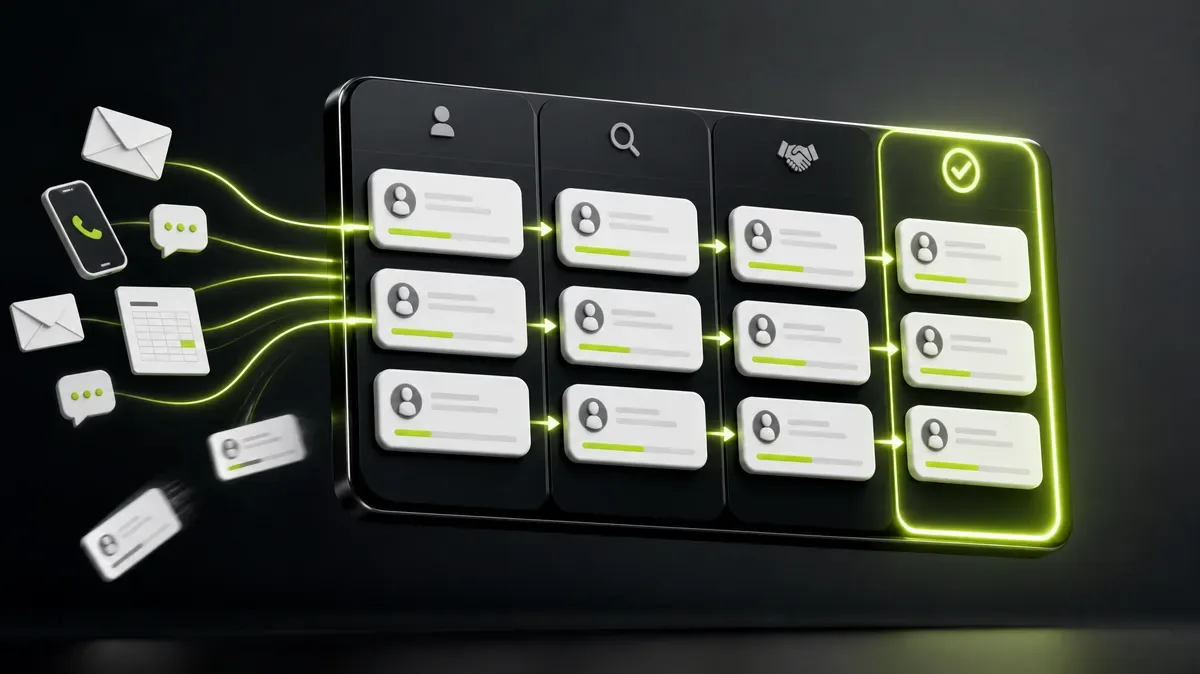
Inquiries come in through the website, phone, email and social media. Without a single system, some of them may remain unanswered. A CRM helps collect inquiries in one place and control how they are handled.
2. Managers forget to follow up with clients
When reminders are kept manually, important calls and meetings are easy to miss. A CRM lets you create tasks, set deadlines and track the next steps with every client.
3. Management doesn't see the real sales picture
Without up-to-date data, it's hard to understand how many deals are in progress, which managers are meeting their targets and at what stage the company is losing clients. A CRM provides process transparency through reports and analytics.
4. Client information is stored in different places
Correspondence history may be with one manager, documents with another, and agreements in the CEO's messenger. A CRM builds a single client database with the full history of interactions.
5. It's hard to control the sales department
The system lets you track task completion, deal flow and compliance with internal processes without constantly asking each employee for reports.
6. The business depends on individual employees
If a manager leaves, the company risks losing important contacts and agreements. A centralized database helps keep information within the company.
7. The number of clients is growing, but efficiency isn't
As the number of inquiries increases, manual management creates additional workload. Automating routine operations helps the team serve more clients without a proportional increase in administrative work.
Off-the-shelf CRM or custom development?
Ready-made CRM solutions can be optimal for companies with standard processes. However, if your business has a specific sales logic, a complex approval structure or needs integration with internal systems, it's worth considering a custom solution.
Webstick develops CRM systems tailored to a company's business processes. This makes it possible to plan the necessary features, integrate the system with existing tools and ensure room for further growth.
Comprehensive automation may also require ERP system development, which brings together the management of resources, finance, warehouse and other operational processes.
How to implement a CRM the right way?
Successful implementation starts not with programming, but with business process analysis. It's important to define which problems need to be solved, what data must be stored and how employees will use the system every day.
Next come functional requirements, interface design, development of the required modules, testing and team training.
Webstick professionals will help you define the optimal approach to automation, develop a CRM tailored to your business and integrate it into your working infrastructure.
Contact the Webstick team to discuss your company's goals and find a solution that will help you manage clients and sales more effectively.