Services
AI Agents in Software Development in 2026: Will They Replace Programmers or Make Development Faster?
28.09.2026 14:00

AI Agents in Software Development in 2026: Will They Replace Programmers or Make Development Faster?

In 2026 the question “can AI write code?” already sounds a bit outdated.

It can. And the point has long been not only that AI can complete a few lines or create a separate function from a description. Modern AI agents get access to a project, analyze dozens of files, search for the required logic, make changes, run automatic checks and prepare the result for the developer. Part of such tasks can be fully delegated to an agent and returned to later, while the specialist works on something else.

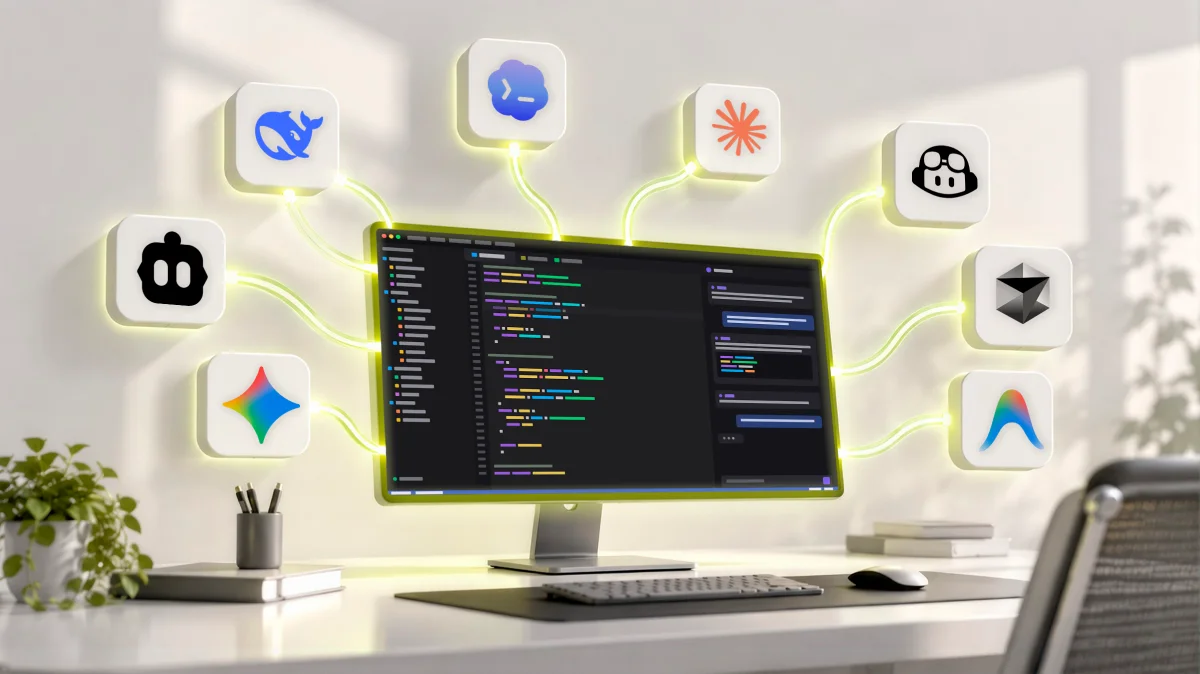
GitHub Copilot coding agent, for example, can receive a task from a project management system, independently analyze the code, make changes and prepare them for review. In modern development environments it is also possible to run several agents in parallel, for example Copilot, Claude or Codex, and assign them different tasks.

Now a task can sound completely different: “Add support for one-time promo codes to the system. Take into account the validity period, maximum number of uses, do not break existing functions and add checks for the new logic.” Then the agent itself searches for where the required part of the system is, how the data is organized and which components need to be changed.

This is no longer just code generation, but delegation of part of the work. And this is exactly where the question about the future of the profession becomes truly interesting.

A programmer is less and less needed just for writing typical code

There is a rather unpleasant truth for the industry: a significant part of the code that was still written manually a few years ago consists of fairly standard operations:

  • add a new field to the system;
  • create a form;
  • connect a new API;
  • write typical checks;
  • update documentation after a functionality change.

A good AI agent can already perform a significant part of such work, and sometimes quite well. The problem starts a little earlier.

Suppose a business wants to add promo codes. Questions immediately arise:

What should happen if a client applied a promo code but paid for the order after its validity period ended?

Is the possibility to use the promo code returned after order cancellation?

Can it be combined with another discount?

What will happen if two clients try to use the last available promo code at the same time?

AI can implement different variants. But someone first has to understand exactly how this function should work for a specific business.

And here the speed of writing code is no longer the main advantage. Moreover, AI can very quickly create a technically neat but incorrect from the business point of view solution.

The developer is gradually turning into a manager of AI agents’ work

One of the most noticeable changes of 2026 is the ability to work not with one AI assistant, but with several agents at once. For example, one can be assigned to search for the cause of an error, the second — writing automatic tests, the third — updating documentation, while the developer themselves can work on a task that requires their direct participation.

OpenAI is developing Codex precisely in the direction of parallel agent work. GitHub and VS Code are also adding the ability to run independent agent sessions. This changes productivity not because AI writes one line of code faster than a human. The main advantage is different: several tasks can be performed simultaneously.

But here a new problem quickly appears. Work needs to be correctly divided. If three agents deal with independent parts of the project, this can significantly save time. If three agents simultaneously change the same important part of the system, the team can get conflicts, duplication of solutions and a lot of additional work on review.

Therefore the ability to correctly formulate and divide a task becomes a separate engineering skill.

MCP: why AI now knows much more about the project

There is another important technology of 2026 — Model Context Protocol, or MCP. The name is technical, but the idea is quite simple.

In a real project information is almost never located in one place. Code may be stored in GitHub, tasks — in a project management system, instructions — in internal documentation, error information — in logs, and data — in databases or external services.

Previously a person had to manually copy the necessary information into an AI chat. MCP allows connecting the necessary information sources and tools to the agent more safely and in a standardized way. Thanks to this a much more complex task can be set.

For example, take such a request: “In the production system an error periodically occurs during payment. Find the possible cause.” If AI sees only this text, there will be little benefit from it. But if the agent has controlled access to the relevant part of the project, technical documentation of the payment system and the error log, it can already conduct a full analysis and propose a specific cause.

This is exactly what distinguishes a modern agent from an ordinary chatbot. It does not just answer a question, but can also receive new information, use available tools and change its actions depending on the result.

AI is gradually moving into background development processes

Another important change is almost invisible to people outside development. AI agents start working not only when a programmer opened a chat: they are gradually integrated into the process of checking and supporting software.

For example, in a traditional process an automatic system can inform the team: “After the last change three checks ended with an error.” But the system itself usually will not explain why this happened.

An AI agent can go further: analyze the changes, read the test results, find a possible connection between the errors and even propose a fix.

In 2026 GitHub is already experimenting with Agentic Workflows, where agents can perform such tasks automatically: analyze problems after updates, sort new error messages, check the relevance of documentation or perform part of the routine project support. And it is exactly such scenarios that may turn out to be more important than spectacular demonstrations where AI generates an entire website in a few minutes.

In real development a lot of time is taken by small things: find the cause of an error, check an update, add a test, update documentation, deal with a small technical debt. If the cost of such work decreases, the productivity of the entire team can grow significantly.

The biggest danger of AI code is that it often looks correct

Bad code created by a human and bad code created by AI have one common problem: the error will not necessarily be obvious. But in the case of AI there is an additional psychological effect. The result can look very convincing: the names are clear, the structure is neat, automatic checks are passed, the agent even left a detailed description of its changes — all this creates a feeling that the task is completed. Yet in reality the problem may remain.

For example:

  • the system works correctly in a typical scenario, but fails when two users perform the same operation simultaneously;
  • a new function breaks compatibility with an old version of a mobile application;
  • tests confirm that the code works as AI wrote it, but do not check whether this corresponds to business requirements.

A METR study in 2026 showed a noticeable pattern: even among AI agent solutions that successfully passed automatic tests, a significant part still required additional work before it could be safely added to a real product.

This is especially critical for payments, security, personal data, access rights and other parts of the system where one error can cost much more than the time saved on development.

The industry uses agents, but does not yet trust them very much

This is clearly visible from the behavior of the developers themselves. According to the results of a Stack Overflow survey in spring 2026, AI agents were already used by 59% of the surveyed technical specialists. At the same time 63% of respondents reported that they rarely or never allow agents to work fully autonomously. That is, a revealing situation has arisen: AI is already useful enough to become an ordinary working tool, but not yet reliable enough to simply give it full access to a project and no longer check the result.

That is why modern agent systems have access limitations, confirmation of dangerous actions and activity logs. The more capabilities an agent receives, the more important control becomes.

Does AI really make development faster?

It would be convenient to answer with one number, for example: “AI speeds up a programmer by 30%”, but reality is much more complex.

In 2025 the research organization METR conducted an experiment with experienced open-source developers who worked in projects familiar to them. The result turned out to be unexpected: with the then AI tools they performed selected tasks on average 19% longer. At the same time the developers themselves thought that AI was speeding them up. This clearly shows how difficult it is to evaluate productivity only by personal feelings.

But already in 2026 new METR data showed a different trend: more modern AI tools began to demonstrate signs of real acceleration. The researchers at the same time noted that it is still difficult to accurately determine the magnitude of the effect.

And this is logical, because the result depends very strongly on the task itself.

On an unfamiliar large project an agent can in a few minutes find the required logic that a developer would spend much more time searching for. For a standard function it can quickly prepare most of the solution.

But if an experienced specialist knows the system perfectly, and AI constantly has to be explained the context and its incorrect assumptions corrected, the gain can be minimal.

There is also another effect that is hard to measure. AI allows doing things for which there was previously simply not enough time, for example writing additional checks, updating documentation, cleaning up an old part of the project, analyzing a small problem that the team postponed for several months.

Therefore productivity is not only the answer to the question “how much faster did we complete one task?” Sometimes it is more correct to ask: “How much useful work can the team now perform in the same time?”

Experienced developers still get more from AI, rather than becoming unnecessary

There is a popular opinion that AI will equalize a beginner and an experienced programmer. They say both will give the model the same task and get the same result, but so far practice shows otherwise.

Anthropic analyzed hundreds of thousands of Claude Code sessions and saw an interesting pattern: a person more often decides what exactly needs to be done, and AI receives more freedom in choosing how to implement it.

At the same time users with greater technical expertise better delegate complex work and more often get a successful result.

The reason is quite simple. To correctly set a task for an agent, you need to understand the system. To check its result — also.

An experienced developer can look at a task and say: “Here there is no need to build a separate complex system. It is enough to change several existing components.” AI may well propose a much more complex solution. Technically it will even work, but a good developer understands that maintaining it later will be more expensive.

AI reduces the cost of implementation well, but so far reduces the cost of the correct technical solution much worse.

What this means for junior developers

The strongest changes may affect entry-level positions.

Previously a junior often received simple and well-described tasks: add a form, make a standard module, write a simple test, transfer a ready design. Exactly such tasks AI performs better and better, therefore the value of a specialist who can only implement clearly described technical tasks is indeed decreasing.

But this does not mean that beginners are no longer needed. What they need to learn is changing.

It is important not just to get a ready result from AI, but to understand:

  • why the solution works exactly this way;
  • what its weak points are;
  • what will happen in a non-standard situation;
  • how to check the correctness of the work;
  • when it is better not to use the AI proposal at all.

AI helps a junior quickly create complex things, but just as quickly one can create something that the person themselves does not understand. And this difference becomes critical.

Can AI agents reduce teams?

This is one of the most uncomfortable points of the entire discussion. If five developers with good AI tools can stably perform the volume of work for which previously seven were needed, business will obviously pay attention to this. Therefore to claim that AI will not affect the number of jobs at all would be strange.

The greatest pressure will probably be felt by work that is easy to describe, easy to check and inexpensive to redo in case of an error. But “automate part of the work” and “replace a profession” are not the same thing.

Between the idea of a product and a ready system there are very many decisions that do not reduce to writing code, but exactly a person must:

  • understand the client’s need;
  • see contradictions in requirements;
  • decide what needs to be done now and what can be postponed;
  • assess risks;
  • choose between a fast and a correct solution;
  • check the result;
  • and most importantly — be responsible for what happens with the system after launch.

AI can already help at each of these stages, but responsibility for important decisions still remains with the person.

Perhaps we are asking the question completely incorrectly

The question “will AI replace programmers or not?” assumes only two scenarios: in the first a person writes code, in the second — AI, and a programmer is no longer needed. But in 2026 a third option is forming.

A person manages a process in which a significant part of the execution can be delegated to AI agents. A developer can spend less time on mechanical writing of typical code and more — on setting tasks, analyzing requirements, architecture, checking and decisions that are difficult to formalize. And if previously the main problem was often “how quickly will we implement this”, then gradually something else becomes more important:
“What exactly do we need to implement at all?”

AI makes writing software cheaper, but it does not make correct product and technical decisions automatic.

So will they replace programmers or make development faster after all?

As of 2026 the answer looks like this: AI agents significantly more change and accelerate the work of programmers than fully replace them.

They can already take on real tasks, analyze large projects, use external tools, work for a long time and perform several processes in parallel. At the same time they still make mistakes in requirements, propose excessively complex solutions and create code that passes automatic checks but is not always ready for real operation.

Therefore the nearest change will probably look not like a company where there are no programmers at all. Rather it will be a smaller team in which each specialist with the help of agents is able to control a significantly larger volume of work.

And this is exactly where competition in the market changes. The main competitor of a developer becomes not AI itself, but another developer who knows how to correctly set tasks for an agent, check results and understands the system well enough not to miss a serious error.

In this sense AI really changes the profession, but so far does not remove the programmer from the process. It raises the bar of how much work one strong specialist can perform.

Other news

Website in 2026: What a Modern Web Product Should Be to Sell, Support the Brand and Be Ready for AI Search

Not so long ago, a company website could be described quite simply: a home page, information about the company, a list of services, contacts and a feedback form.

Today that is no longer enough.

A user comes to a website with a specific expectation. They want to quickly understand what the company offers, why this particular offer suits them, how much it costs, how to place an order or how to get the information they need.

At the same time, the website must work for the business: generate leads, sell, build trust, support SEO, collect analytics, integrate with CRM and other systems.

And in 2026 another important factor is added — artificial intelligence is changing the way people search for and interact with information.

Therefore, modern website development is no longer just creating a beautiful web page. It is creating a digital product.

Webstick Global develops websites, online stores, corporate web products, landing pages and web portals. You can learn more about the company’s approach on the website development page of Webstick Global.

A website is no longer just a “business card”

If a website exists only so that a potential client can see the logo, address and phone number, the business is using only a small part of its capabilities.

A modern website can simultaneously be:

  • a sales channel;
  • a source of leads;
  • a product presentation;
  • a catalog;
  • an online store;
  • a self-service platform;
  • an information center;
  • part of CRM;
  • a marketing tool;
  • an SEO asset;
  • an integration point with other digital systems.

Therefore, before starting development, it is worth defining:
what business function should the website perform?

The answer to this question will determine the structure, design, technologies and even the content model.

Trend #1. AI is changing search — and the website must be ready

Search is gradually moving from simple keyword entry to dialogue with AI systems.

A user may not search for:
“mobile app for an online store”.

They may ask:
“What technology will allow my online store to get its own mobile sales channel with a loyalty program?”

Therefore, a website must contain not only keywords, but structured, logical and meaningful information.

This means:

  • clear page structure;
  • understandable headings;
  • meaningful descriptions;
  • answers to real customer questions;
  • logical connections between pages;
  • structured data;
  • high-quality text content.

In other words, a website needs to be created not only for a search robot, but for systems that try to understand the meaning of the page.

Trend #2. AI becomes part of the web product itself

AI can be used not only for search.

In modern web products it can help:

  • recommend products;
  • automatically process requests;
  • answer customer inquiries;
  • analyze user behavior;
  • generate personalized content;
  • work with large data sets;
  • automate internal operations.

For example, in a SaaS product AI can become a user assistant.
In an online store — a recommendation system.
On a corporate website — an intelligent consultant.
In a B2B portal — an information search tool.

Therefore, when developing a website, it is already worth providing for the possibility of future AI expansion today.

Trend #3. Speed becomes part of the brand

A user does not think:
“The website uses a good frontend framework”.

They think:
“This website is fast” or “this website is slow”.

Speed affects:

  • conversion;
  • convenience;
  • SEO;
  • user behavior;
  • brand perception.

This is especially important for mobile traffic.

Therefore, professional website development must take into account:

  • image optimization;
  • caching;
  • JavaScript optimization;
  • proper font loading;
  • server-side optimization;
  • CDN;
  • lazy loading;
  • database optimization;
  • Core Web Vitals.

A website must be fast not only on a powerful developer laptop, but also on an ordinary smartphone with unstable mobile internet.

Trend #4. Design becomes more minimalist, but content becomes more important

Modern web design is gradually moving away from overloaded pages.

A user does not need to see twenty different elements at the same time.

They need answers to three questions:
What do you offer?
Why do I need it?
What should I do next?

Therefore, an effective website is built around the user scenario.

For example:
Problem → solution → advantages → evidence → cases → call to action.

This approach works especially well for B2B services and complex IT products.

Case: Yermolenko Art Foundation
A good example of how a website can work not as a standard corporate resource, but as a full-fledged digital space is Yermolenko Art Foundation: a gallery website of Ukrainian art.

For the project, Webstick Global created a modern restrained design with a focus on artworks. The website received separate sections for the collection, artists, events, information about the foundation and contacts.

This is an example of an important principle:
website design should emphasize the product, not compete with it for the user’s attention.

For an art gallery this means a focus on the works.
For an online store — on the products.
For SaaS — on the product value.
For a corporate website — on trust and expertise.

Trend #5. A website must be part of the digital ecosystem

One of the most important trends in web development is the rejection of isolated websites.

A modern business may have:
website + CRM + ERP + mobile app + analytics + payment systems + marketing tools + warehouse system.

The user sees only the website.
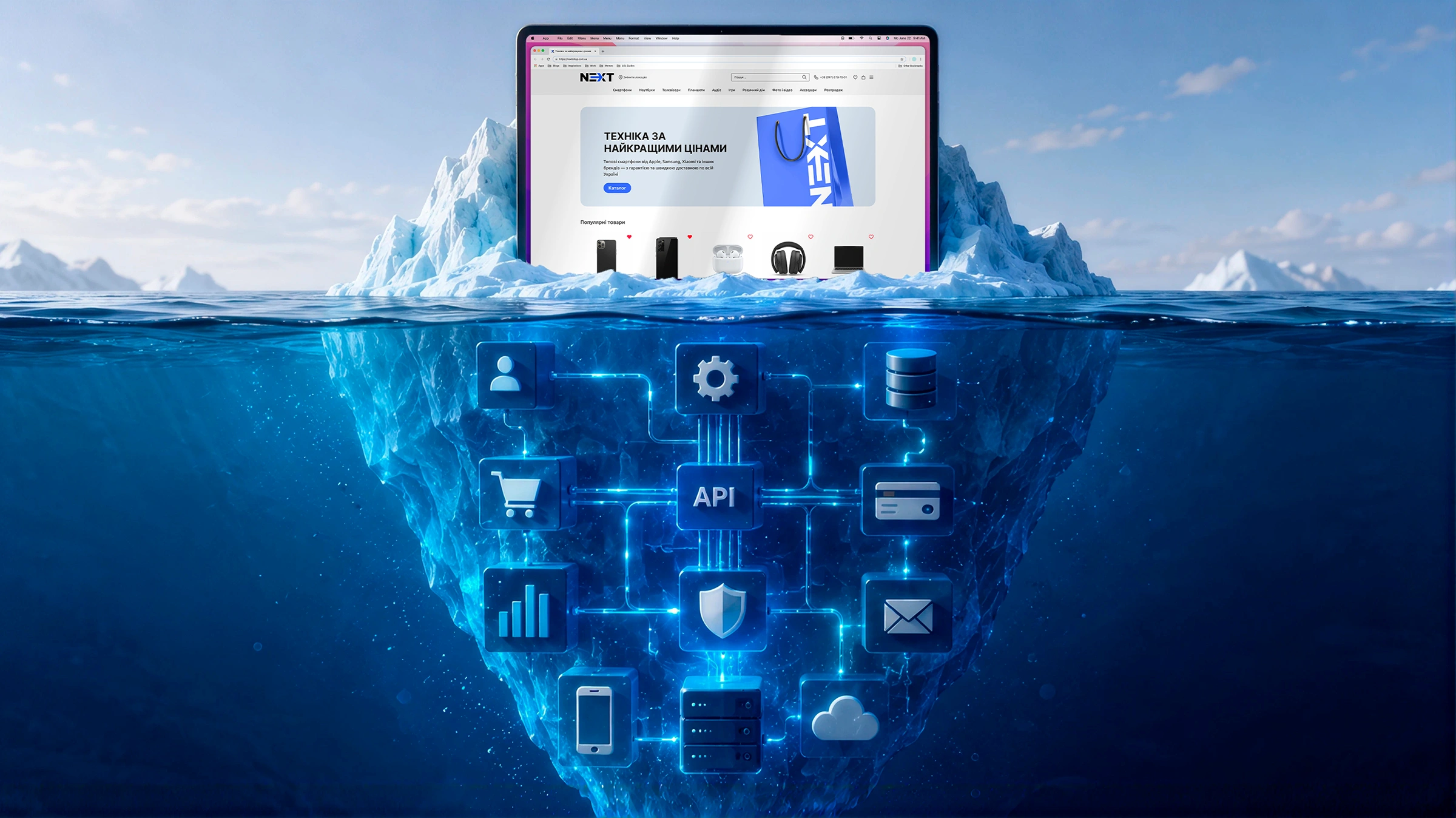
But behind it dozens of integrations may be working.

That is why web development increasingly intersects with custom software development.

A website can not only display information, but transfer data to CRM, create orders, synchronize products, form requests and launch automated business processes.

Case Biksico: website as a tool for selling a digital product
The Biksico case — development of a service website — clearly demonstrates this approach.

For Biksico an informational landing website was created that presents the service capabilities, tariffs and main product advantages.

The website has separately worked-out blocks with problems of online stores, Biksico capabilities, loyalty and communication tools, functionality of the owner’s mobile app, integrations and tariffs.

This is not just a “about the company” page.
The website actually performs the role of a seller of a digital product.

Trend #6. Landing page becomes a mini-product

A landing page has long ceased to be just a long page with beautiful photos.

A good landing page is a concentrated sales system.

Its tasks:

  1. attract attention;
  2. form interest;
  3. explain the product;
  4. show advantages;
  5. remove objections;
  6. confirm trust;
  7. lead to a request or purchase.

That is why the structure of a landing page should be built around the customer journey.

A good example is WST: development of a product landing page.

For this project Webstick Global created a landing page design with an emphasis on key product advantages, functionality, the ability to download a mobile app, manufacturer contacts and a lead form for receiving requests.

That is, the landing page became not just a presentation, but a tool for generating potential clients.

Trend #7. Mobile-first is no longer an option

Most modern digital products need to be designed with a smartphone in mind even before creating the desktop version.

Mobile-first does not simply mean:
“we will make it responsive”.

It means:
first we determine how the user will interact with the product on a small screen.

You need to think through:

  • navigation;
  • button size;
  • information order;
  • forms;
  • search;
  • filters;
  • speed;
  • readability;
  • touch interactions.

This is especially important for e-commerce.
If it is difficult for a user to find a product or place an order from a smartphone, the business loses a sale.

Trend #8. An online store turns into a personalized platform

A modern e-commerce website should no longer be just a catalog.

It can use:

  • personal recommendations;
  • browsing history;
  • personal promotions;
  • loyalty programs;
  • AI search;
  • dynamic categories;
  • related product recommendations;
  • automatic offers;
  • CRM integrations;
  • warehouse synchronization.

Therefore, online store development often requires a much more complex architecture than a regular corporate website.

Trend #9. Headless and API-first approaches

For companies planning to scale, separating frontend and backend becomes important.

API-first architecture allows using one business logic for different channels:

  • website;
  • mobile app;
  • admin panel;
  • partner cabinet;
  • other digital products.

For example, one product catalog can be used simultaneously by the website and the mobile app.

This makes it possible not to create the same logic twice.

Trend #10. Security becomes a basic requirement

A modern website must protect not only the company, but also the user.

Especially if it works with:

  • personal data;
  • payments;
  • accounts;
  • documents;
  • corporate information;
  • orders.

Professional development must take into account:

  • secure authorization;
  • API protection;
  • access control;
  • encryption;
  • backup;
  • monitoring;
  • protection against typical web attacks;
  • secure work with personal data.

Security should not be a separate stage that appears before release.
It should be part of the architecture.

What website do different types of business need?

There is no universal format.

For a startup
A landing page or product website that quickly checks demand may be needed.

For a B2B company
A corporate website, cases, expertise, services and lead generation are important.

For an online store
A catalog, search, filters, cart, payment, CRM and logistics integrations are needed.

For a SaaS company
A product website is required that explains the value of the service, tariffs, functionality and usage scenarios.

For a large business
A web portal with personal cabinets, integrations and a complex data management system may be needed.

That is why proper website development always starts with business analysis.

What is more important: design or technologies?

The correct answer is neither one separately.

A beautiful website with poor architecture will quickly become a problem.
A technologically complex website with unclear UX will not be effective.

Therefore, a professional web product must combine:
strategy + UX + UI + frontend + backend + SEO + analytics + security + integrations.

It is the comprehensive approach that allows creating a website that works not only on the day of launch, but remains the foundation of the company’s digital presence for years.

How Webstick Global approaches website development

Webstick Global creates different types of web products: landing pages, corporate websites, online stores, web portals and CMS websites. The company also works with web applications, SaaS and custom software.

The process may include:
Analysis
Studying the business, audience and competitors.

Strategy
Defining the structure and main user scenarios.

UX/UI
Creating a prototype and visual system.

Development
Frontend, backend, API and integrations.

Testing
Checking functionality, responsiveness, performance and security.

Launch
Publishing the website and connecting the necessary infrastructure.

Support
Further improvement of the product based on data and business needs.

Why cases are important when choosing a developer?

The web development market is overcrowded with companies that offer a “turnkey website”.

But between a simple template website and a full-fledged digital product there can be a huge difference.

That is why before choosing a contractor it is worth looking at real cases.

In the portfolio of Webstick Global there are different types of web projects:

These projects show different approaches to web development: from the presentation of a cultural brand to a SaaS product and a commercial landing page.

What will the website of the future be like?

We will probably see even more personalization, AI interfaces and automation.

A website is gradually ceasing to be a static page that a user simply views.

It becomes an environment that:

  • understands context;
  • recommends;
  • answers;
  • personalizes;
  • automates;
  • integrates with other products;
  • works simultaneously in different digital channels.

But this does not mean that every business needs a complex AI website.

On the contrary.
The best digital product is the one where every technology has a specific purpose.

Conclusion

In 2026 a website is no longer just a “company page on the internet”.

It is a digital asset of the business.

It can sell, generate leads, build trust, automate processes, support clients, collect data and be the central point of interaction between the company and its audience.

AI, speed, mobile-first, personalization, security, API integrations and high-quality UX are becoming important components of modern web development.

But the most important thing is not to follow every trend.

It is important to create a website that solves the specific tasks of a specific business.

If a company needs a website, online store, landing page or complex web product, the Webstick Global team can help go through the full path — from concept formation and UX/UI to development, integrations, launch and further development.

You can learn more about website development by Webstick Global and view examples of implemented projects on the company’s website.

AWS Cloud for increasing company efficiency
AWS Cloud is the key to increasing your company's efficiency

The development of cloud technologies continues to change the landscape of the IT industry, providing companies with the ability to effectively manage their resources and infrastructure. In this context, Amazon Web Services (AWS) Cloud stands apart, offering a wide range of services for data processing, application deployment, analytics, and more. For many companies, moving to the AWS Cloud is a key step in their digital transformation.

AWS Cloud provides a flexible and scalable platform that allows companies to manage their infrastructure without significant capital expenditures. It offers server virtualization services, data storage, databases, and tools for developing, testing, and deploying applications. In addition, AWS provides a high level of security and availability, making it an attractive choice for companies of all sizes. 

The capabilities of AWS Cloud are not limited to data storage and computing power. It also offers a wide range of services for data analytics, machine learning, the Internet of Things (IoT), and more. These services help businesses gain valuable insights from their data and make better decisions based on analytics.

One of the key advantages of AWS Cloud is its flexibility. Users can choose the services they need and scale their resources as their business grows. This allows companies to save money by not spending it on unnecessary resources and maximizes the efficiency of infrastructure use. 

For many companies, moving to the AWS Cloud is becoming a strategic decision that allows them to be more competitive in the rapidly changing business world. AWS Cloud provides not only technological capabilities, but also innovative potential, helping companies develop and implement new products and services faster and more efficiently. 

Our company is an expert in AWS Cloud-based software development. We help our clients take full advantage of cloud technologies by offering consulting, development, and support for solutions tailored to their unique needs. By contacting us, you get a reliable partner on your way to digital transformation and innovative development.

Modern AI trends in software development
Modern AI trends used in software development

In the world of rapid technological development, artificial intelligence (AI) plays a key role in software development, providing unique capabilities and solutions for various industries. In this article, we'll take a look at the current trends and innovations in AI that affect software development.

1. Machine learning and deep learning

Machine Learning (ML) and Deep Learning (DL) remain one of the most relevant and promising areas in the field of artificial intelligence. These methods allow software to learn from data and make predictions or decisions without programming. Today, machine learning and deep learning are used in various fields, including data analytics, natural language processing, computer vision, and process automation.

2. Automation of software development using AI

The use of artificial intelligence to automate software development processes is becoming increasingly popular. Code automation tools, such as code generation using neural networks or code optimization algorithms, help developers speed up the software development process and reduce the likelihood of errors.

3. Cloud computing and artificial intelligence

Artificial intelligence is being integrated into cloud computing, opening up new opportunities for software development. Cloud platforms provide high-performance computing resources and tools for deploying and managing AI-based applications. This allows companies to quickly scale their solutions and improve their performance.

4. Intelligent agents and bots

Intelligent agents and bots are becoming increasingly common in various applications and services. With the help of artificial intelligence, they are able to process user requests, provide information, perform tasks, and even interact with users in natural language. This makes software interaction more convenient and efficient for end users.

5. Intelligent analytics and forecasting

Modern analytics and business intelligence systems use artificial intelligence to analyze large amounts of data and identify hidden patterns and trends. This allows companies to make more informed decisions, optimize business processes, and predict future events with greater accuracy.

Modern trends and innovations in artificial intelligence are transforming the way software is developed. From machine learning to software development automation and cloud computing, AI is playing a key role in creating smarter, more efficient and innovative solutions for various industries.

Modern AI trends in software development
Modern AI trends used in software development

In the world of rapid technological development, artificial intelligence (AI) plays a key role in software development, providing unique capabilities and solutions for various industries. In this article, we'll take a look at the current trends and innovations in AI that affect software development.

1. Machine learning and deep learning

Machine Learning (ML) and Deep Learning (DL) remain one of the most relevant and promising areas in the field of artificial intelligence. These methods allow software to learn from data and make predictions or decisions without programming. Today, machine learning and deep learning are used in various fields, including data analytics, natural language processing, computer vision, and process automation.

2. Automation of software development using AI

The use of artificial intelligence to automate software development processes is becoming increasingly popular. Code automation tools, such as code generation using neural networks or code optimization algorithms, help developers speed up the software development process and reduce the likelihood of errors.

3. Cloud computing and artificial intelligence

Artificial intelligence is being integrated into cloud computing, opening up new opportunities for software development. Cloud platforms provide high-performance computing resources and tools for deploying and managing AI-based applications. This allows companies to quickly scale their solutions and improve their performance.

4. Intelligent agents and bots

Intelligent agents and bots are becoming increasingly common in various applications and services. With the help of artificial intelligence, they are able to process user requests, provide information, perform tasks, and even interact with users in natural language. This makes software interaction more convenient and efficient for end users.

5. Intelligent analytics and forecasting

Modern analytics and business intelligence systems use artificial intelligence to analyze large amounts of data and identify hidden patterns and trends. This allows companies to make more informed decisions, optimize business processes, and predict future events with greater accuracy.

Modern trends and innovations in artificial intelligence are transforming the way software is developed. From machine learning to software development automation and cloud computing, AI is playing a key role in creating smarter, more efficient and innovative solutions for various industries.

AWS Cloud for increasing company efficiency
AWS Cloud is the key to increasing your company's efficiency

The development of cloud technologies continues to change the landscape of the IT industry, providing companies with the ability to effectively manage their resources and infrastructure. In this context, Amazon Web Services (AWS) Cloud stands apart, offering a wide range of services for data processing, application deployment, analytics, and more. For many companies, moving to the AWS Cloud is a key step in their digital transformation.

AWS Cloud provides a flexible and scalable platform that allows companies to manage their infrastructure without significant capital expenditures. It offers server virtualization services, data storage, databases, and tools for developing, testing, and deploying applications. In addition, AWS provides a high level of security and availability, making it an attractive choice for companies of all sizes. 

The capabilities of AWS Cloud are not limited to data storage and computing power. It also offers a wide range of services for data analytics, machine learning, the Internet of Things (IoT), and more. These services help businesses gain valuable insights from their data and make better decisions based on analytics.

One of the key advantages of AWS Cloud is its flexibility. Users can choose the services they need and scale their resources as their business grows. This allows companies to save money by not spending it on unnecessary resources and maximizes the efficiency of infrastructure use. 

For many companies, moving to the AWS Cloud is becoming a strategic decision that allows them to be more competitive in the rapidly changing business world. AWS Cloud provides not only technological capabilities, but also innovative potential, helping companies develop and implement new products and services faster and more efficiently. 

Our company is an expert in AWS Cloud-based software development. We help our clients take full advantage of cloud technologies by offering consulting, development, and support for solutions tailored to their unique needs. By contacting us, you get a reliable partner on your way to digital transformation and innovative development.

Website in 2026: What a Modern Web Product Should Be to Sell, Support the Brand and Be Ready for AI Search

Not so long ago, a company website could be described quite simply: a home page, information about the company, a list of services, contacts and a feedback form.

Today that is no longer enough.

A user comes to a website with a specific expectation. They want to quickly understand what the company offers, why this particular offer suits them, how much it costs, how to place an order or how to get the information they need.

At the same time, the website must work for the business: generate leads, sell, build trust, support SEO, collect analytics, integrate with CRM and other systems.

And in 2026 another important factor is added — artificial intelligence is changing the way people search for and interact with information.

Therefore, modern website development is no longer just creating a beautiful web page. It is creating a digital product.

Webstick Global develops websites, online stores, corporate web products, landing pages and web portals. You can learn more about the company’s approach on the website development page of Webstick Global.

A website is no longer just a “business card”

If a website exists only so that a potential client can see the logo, address and phone number, the business is using only a small part of its capabilities.

A modern website can simultaneously be:

  • a sales channel;
  • a source of leads;
  • a product presentation;
  • a catalog;
  • an online store;
  • a self-service platform;
  • an information center;
  • part of CRM;
  • a marketing tool;
  • an SEO asset;
  • an integration point with other digital systems.

Therefore, before starting development, it is worth defining:
what business function should the website perform?

The answer to this question will determine the structure, design, technologies and even the content model.

Trend #1. AI is changing search — and the website must be ready

Search is gradually moving from simple keyword entry to dialogue with AI systems.

A user may not search for:
“mobile app for an online store”.

They may ask:
“What technology will allow my online store to get its own mobile sales channel with a loyalty program?”

Therefore, a website must contain not only keywords, but structured, logical and meaningful information.

This means:

  • clear page structure;
  • understandable headings;
  • meaningful descriptions;
  • answers to real customer questions;
  • logical connections between pages;
  • structured data;
  • high-quality text content.

In other words, a website needs to be created not only for a search robot, but for systems that try to understand the meaning of the page.

Trend #2. AI becomes part of the web product itself

AI can be used not only for search.

In modern web products it can help:

  • recommend products;
  • automatically process requests;
  • answer customer inquiries;
  • analyze user behavior;
  • generate personalized content;
  • work with large data sets;
  • automate internal operations.

For example, in a SaaS product AI can become a user assistant.
In an online store — a recommendation system.
On a corporate website — an intelligent consultant.
In a B2B portal — an information search tool.

Therefore, when developing a website, it is already worth providing for the possibility of future AI expansion today.

Trend #3. Speed becomes part of the brand

A user does not think:
“The website uses a good frontend framework”.

They think:
“This website is fast” or “this website is slow”.

Speed affects:

  • conversion;
  • convenience;
  • SEO;
  • user behavior;
  • brand perception.

This is especially important for mobile traffic.

Therefore, professional website development must take into account:

  • image optimization;
  • caching;
  • JavaScript optimization;
  • proper font loading;
  • server-side optimization;
  • CDN;
  • lazy loading;
  • database optimization;
  • Core Web Vitals.

A website must be fast not only on a powerful developer laptop, but also on an ordinary smartphone with unstable mobile internet.

Trend #4. Design becomes more minimalist, but content becomes more important

Modern web design is gradually moving away from overloaded pages.

A user does not need to see twenty different elements at the same time.

They need answers to three questions:
What do you offer?
Why do I need it?
What should I do next?

Therefore, an effective website is built around the user scenario.

For example:
Problem → solution → advantages → evidence → cases → call to action.

This approach works especially well for B2B services and complex IT products.

Case: Yermolenko Art Foundation
A good example of how a website can work not as a standard corporate resource, but as a full-fledged digital space is Yermolenko Art Foundation: a gallery website of Ukrainian art.

For the project, Webstick Global created a modern restrained design with a focus on artworks. The website received separate sections for the collection, artists, events, information about the foundation and contacts.

This is an example of an important principle:
website design should emphasize the product, not compete with it for the user’s attention.

For an art gallery this means a focus on the works.
For an online store — on the products.
For SaaS — on the product value.
For a corporate website — on trust and expertise.

Trend #5. A website must be part of the digital ecosystem

One of the most important trends in web development is the rejection of isolated websites.

A modern business may have:
website + CRM + ERP + mobile app + analytics + payment systems + marketing tools + warehouse system.

The user sees only the website.
But behind it dozens of integrations may be working.

That is why web development increasingly intersects with custom software development.

A website can not only display information, but transfer data to CRM, create orders, synchronize products, form requests and launch automated business processes.

Case Biksico: website as a tool for selling a digital product
The Biksico case — development of a service website — clearly demonstrates this approach.

For Biksico an informational landing website was created that presents the service capabilities, tariffs and main product advantages.

The website has separately worked-out blocks with problems of online stores, Biksico capabilities, loyalty and communication tools, functionality of the owner’s mobile app, integrations and tariffs.

This is not just a “about the company” page.
The website actually performs the role of a seller of a digital product.

Trend #6. Landing page becomes a mini-product

A landing page has long ceased to be just a long page with beautiful photos.

A good landing page is a concentrated sales system.

Its tasks:

  1. attract attention;
  2. form interest;
  3. explain the product;
  4. show advantages;
  5. remove objections;
  6. confirm trust;
  7. lead to a request or purchase.

That is why the structure of a landing page should be built around the customer journey.

A good example is WST: development of a product landing page.

For this project Webstick Global created a landing page design with an emphasis on key product advantages, functionality, the ability to download a mobile app, manufacturer contacts and a lead form for receiving requests.

That is, the landing page became not just a presentation, but a tool for generating potential clients.

Trend #7. Mobile-first is no longer an option

Most modern digital products need to be designed with a smartphone in mind even before creating the desktop version.

Mobile-first does not simply mean:
“we will make it responsive”.

It means:
first we determine how the user will interact with the product on a small screen.

You need to think through:

  • navigation;
  • button size;
  • information order;
  • forms;
  • search;
  • filters;
  • speed;
  • readability;
  • touch interactions.

This is especially important for e-commerce.
If it is difficult for a user to find a product or place an order from a smartphone, the business loses a sale.

Trend #8. An online store turns into a personalized platform

A modern e-commerce website should no longer be just a catalog.

It can use:

  • personal recommendations;
  • browsing history;
  • personal promotions;
  • loyalty programs;
  • AI search;
  • dynamic categories;
  • related product recommendations;
  • automatic offers;
  • CRM integrations;
  • warehouse synchronization.

Therefore, online store development often requires a much more complex architecture than a regular corporate website.

Trend #9. Headless and API-first approaches

For companies planning to scale, separating frontend and backend becomes important.

API-first architecture allows using one business logic for different channels:

  • website;
  • mobile app;
  • admin panel;
  • partner cabinet;
  • other digital products.

For example, one product catalog can be used simultaneously by the website and the mobile app.

This makes it possible not to create the same logic twice.

Trend #10. Security becomes a basic requirement

A modern website must protect not only the company, but also the user.

Especially if it works with:

  • personal data;
  • payments;
  • accounts;
  • documents;
  • corporate information;
  • orders.

Professional development must take into account:

  • secure authorization;
  • API protection;
  • access control;
  • encryption;
  • backup;
  • monitoring;
  • protection against typical web attacks;
  • secure work with personal data.

Security should not be a separate stage that appears before release.
It should be part of the architecture.

What website do different types of business need?

There is no universal format.

For a startup
A landing page or product website that quickly checks demand may be needed.

For a B2B company
A corporate website, cases, expertise, services and lead generation are important.

For an online store
A catalog, search, filters, cart, payment, CRM and logistics integrations are needed.

For a SaaS company
A product website is required that explains the value of the service, tariffs, functionality and usage scenarios.

For a large business
A web portal with personal cabinets, integrations and a complex data management system may be needed.

That is why proper website development always starts with business analysis.

What is more important: design or technologies?

The correct answer is neither one separately.

A beautiful website with poor architecture will quickly become a problem.
A technologically complex website with unclear UX will not be effective.

Therefore, a professional web product must combine:
strategy + UX + UI + frontend + backend + SEO + analytics + security + integrations.

It is the comprehensive approach that allows creating a website that works not only on the day of launch, but remains the foundation of the company’s digital presence for years.

How Webstick Global approaches website development

Webstick Global creates different types of web products: landing pages, corporate websites, online stores, web portals and CMS websites. The company also works with web applications, SaaS and custom software.

The process may include:
Analysis
Studying the business, audience and competitors.

Strategy
Defining the structure and main user scenarios.

UX/UI
Creating a prototype and visual system.

Development
Frontend, backend, API and integrations.

Testing
Checking functionality, responsiveness, performance and security.

Launch
Publishing the website and connecting the necessary infrastructure.

Support
Further improvement of the product based on data and business needs.

Why cases are important when choosing a developer?

The web development market is overcrowded with companies that offer a “turnkey website”.

But between a simple template website and a full-fledged digital product there can be a huge difference.

That is why before choosing a contractor it is worth looking at real cases.

In the portfolio of Webstick Global there are different types of web projects:

These projects show different approaches to web development: from the presentation of a cultural brand to a SaaS product and a commercial landing page.

What will the website of the future be like?

We will probably see even more personalization, AI interfaces and automation.

A website is gradually ceasing to be a static page that a user simply views.

It becomes an environment that:

  • understands context;
  • recommends;
  • answers;
  • personalizes;
  • automates;
  • integrates with other products;
  • works simultaneously in different digital channels.

But this does not mean that every business needs a complex AI website.

On the contrary.
The best digital product is the one where every technology has a specific purpose.

Conclusion

In 2026 a website is no longer just a “company page on the internet”.

It is a digital asset of the business.

It can sell, generate leads, build trust, automate processes, support clients, collect data and be the central point of interaction between the company and its audience.

AI, speed, mobile-first, personalization, security, API integrations and high-quality UX are becoming important components of modern web development.

But the most important thing is not to follow every trend.

It is important to create a website that solves the specific tasks of a specific business.

If a company needs a website, online store, landing page or complex web product, the Webstick Global team can help go through the full path — from concept formation and UX/UI to development, integrations, launch and further development.

You can learn more about website development by Webstick Global and view examples of implemented projects on the company’s website.

This site uses cookies to make your experience more comfortable. By continuing to browse the site, you agree to the use of cookies