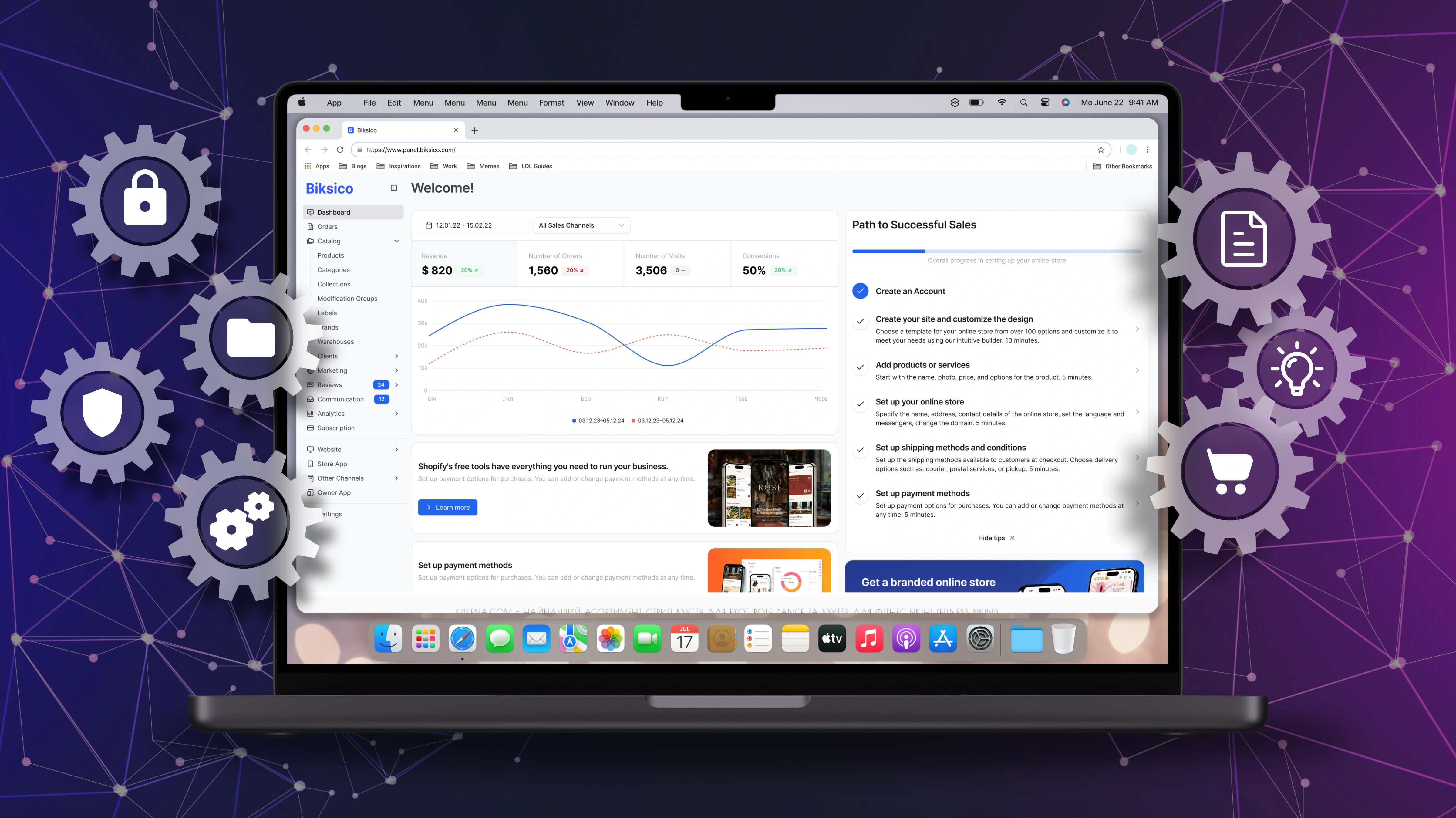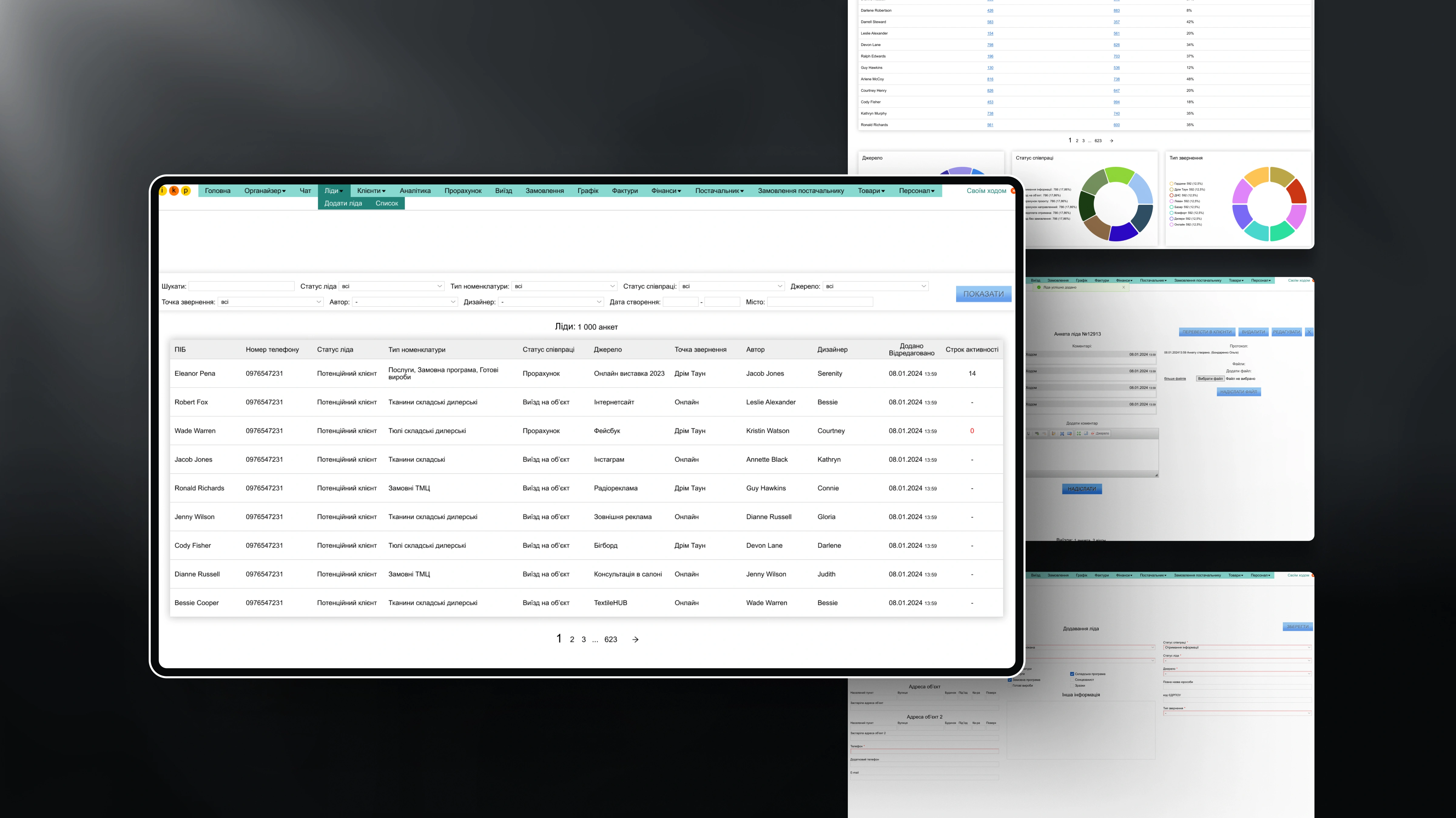
Mobile applications have evolved beyond being a mere part of daily life—they are now a powerful tool for business growth. From large corporations to small enterprises, mobile apps offer numerous opportunities for attracting new customers, improving engagement with existing ones, and automating business processes. But how can you create a successful mobile application that not only looks good but also fulfills its purpose—generating revenue and attracting users?
This article explores the steps involved in developing a successful business mobile app, from idea to launch, and provides tips on marketing and maintaining the app during its operational phase. It’s crucial to understand that app development is not just a technical process but a complex business strategy.
1. Understanding the Purpose of Your App: Why Does Your Business Need It?
Before starting the development process, clearly define the purpose of your app. This helps identify which features and functionalities will be most valuable for your target audience. A business mobile app can serve various purposes:
- Attracting new customers: If your business is just starting or you want to reach a younger audience, a mobile app can be an essential marketing tool.
- Improving interaction with existing customers: Features such as loyalty programs, personalized offers, or easy access to online services can enhance customer engagement.
- Automating business processes: Many companies create internal apps to simplify processes like inventory management, supplier interactions, or CRM systems.
Defining the purpose will help you plan the app’s functionality effectively and assess its success post-launch.
2. Market Research and Understanding Your Target Audience
Before you start developing, you should conduct in-depth market research and study the needs of your target audience. This will allow you to understand what your potential users expect from your app, as well as identify the strengths and weaknesses of your competitors.
Study the needs of users
To make your mobile app really useful, you need to know:
- What problems your users want to solve with the app.
- What features they want to see in the app.
- How they use similar apps (what they like or dislike).
Use interviews with customers, surveys, and reviews of similar products to get this information.
Competitor analysis
Look at the mobile apps offered by your competitors. Ask yourself a few questions:
- What do they do well and what do they do poorly?
- What features should you add or improve?
- How can your app be better or differentiate itself from the competition?
Thanks to this analysis, you can get valuable ideas for your app and avoid common mistakes.
3. Designing UX/UI: Creating an Intuitive Interface
UX (User Experience) and UI (User Interface) are two of the most important aspects that determine how convenient and attractive your mobile application will be for users.
UX (User Experience)
UX is the user's interaction with the application. Users should be able to easily find the function or information they need without experiencing any inconvenience. Here are some key principles of good UX design:
- Intuitive interface: all elements should be logically arranged and easily accessible.
- Speed and efficiency: the application should be fast in operation, and all functions should work without delay.
- Minimalist design: do not overload the interface with unnecessary elements. Less is more.
UI (User Interface)
UI is the appearance of your application. It is important that the interface is not only convenient but also aesthetically pleasing. Here are some tips for UI:
- Authentic style: stick to a single color scheme, use high-quality fonts and harmonious design elements.
- Adaptability: the app should look correct on different devices and screens, including phones and tablets of different sizes.
- Buttons and navigation elements: they should be large and easy to click, especially on mobile devices.
Ensuring good UX/UI design is the key to a positive user experience, which increases the likelihood of them returning to your app.
4. Choosing the Right Technology for Development
Deciding which technology to choose to develop your app is critical to its success. It depends on your technical requirements, goals, and budget.
Native app
Native apps are developed for a specific operating system (iOS or Android) using specific programming languages, such as Swift for iOS or Kotlin for Android. The main advantages of native applications:
- Higher performance and speed.
- Better integration with device features (GPS, camera, sensors, etc.).
- More opportunities for personalization.
However, native development can be more expensive and time-consuming, as a separate version of the app needs to be created for each operating system.
Cross-platform applications
Cross-platform apps allow you to create a single application that works on both iOS and Android platforms. Tools such as React Native, Flutter, or Xamarin allow you to develop applications with a single code for two platforms.
Advantages of cross-platform applications:
- Faster development time.
- Lower development and support costs.
- Ability to use the same resources for both platforms.
However, sometimes cross-platform applications have limited performance or cannot use all the specific features of devices.
5. Testing Your App
After development, rigorous testing ensures the app functions correctly, is bug-free, and meets user expectations. Testing stages include:
- Functional testing: Verifying all app features work as intended.
- Performance testing: Assessing speed and efficiency under high loads.
- Usability testing: Ensuring a seamless user interface and gathering user feedback.
- Compatibility testing: Testing across various devices, screen sizes, and operating systems.
Don't forget to test your app on both real devices and emulators. It is important to get feedback from real users to identify problems that may have gone unnoticed during development.
6. Marketing and Promoting Your App
To make your mobile app successful, it is important to actively promote it among your target audience.
App Store Optimization (ASO)
In order for your app to gain visibility in the app stores (App Store, Google Play), you need to use the principles of ASO (App Store Optimization). This includes:
- Optimizing keywords in the app title and description.
- Use of high-quality screenshots and videos.
- Attracting reviews and ratings from users.
Advertising and PR
The following methods can be used to quickly attract users:
- Social media advertising.
- Google Ads and Facebook Ads.
- Influencers and bloggers.
Remember that marketing should be aimed at solving the problems of your audience, not just advertising a product.
7. Maintaining and Updating Your App
Creating a mobile app does not end with its launch. After the release, it is important to ensure that the app is maintained and regularly updated. This may include:
- Fixing bugs identified after launch.
- Adding features based on user feedback.
- Ensuring compatibility with new operating system versions.
Maintaining an application is no less important than creating it, as it ensures long-term interaction with users.
Creating a successful mobile application is a complex but very important process for business development. From planning and designing to testing and launching, each stage requires careful attention and effort. Remember that a high-quality app is not only a technical product, but also an important part of your customer acquisition and retention strategy.
If you carefully approach each stage of development, conduct proper market research, use the best technologies, and don't forget about marketing, your mobile app can become a powerful tool for growing your business and attracting new opportunities.
In the world of rapid technological development, artificial intelligence (AI) plays a key role in software development, providing unique capabilities and solutions for various industries. In this article, we'll take a look at the current trends and innovations in AI that affect software development.
1. Machine learning and deep learning
Machine Learning (ML) and Deep Learning (DL) remain one of the most relevant and promising areas in the field of artificial intelligence. These methods allow software to learn from data and make predictions or decisions without programming. Today, machine learning and deep learning are used in various fields, including data analytics, natural language processing, computer vision, and process automation.
2. Automation of software development using AI
The use of artificial intelligence to automate software development processes is becoming increasingly popular. Code automation tools, such as code generation using neural networks or code optimization algorithms, help developers speed up the software development process and reduce the likelihood of errors.
3. Cloud computing and artificial intelligence
Artificial intelligence is being integrated into cloud computing, opening up new opportunities for software development. Cloud platforms provide high-performance computing resources and tools for deploying and managing AI-based applications. This allows companies to quickly scale their solutions and improve their performance.
4. Intelligent agents and bots
Intelligent agents and bots are becoming increasingly common in various applications and services. With the help of artificial intelligence, they are able to process user requests, provide information, perform tasks, and even interact with users in natural language. This makes software interaction more convenient and efficient for end users.
5. Intelligent analytics and forecasting
Modern analytics and business intelligence systems use artificial intelligence to analyze large amounts of data and identify hidden patterns and trends. This allows companies to make more informed decisions, optimize business processes, and predict future events with greater accuracy.
Modern trends and innovations in artificial intelligence are transforming the way software is developed. From machine learning to software development automation and cloud computing, AI is playing a key role in creating smarter, more efficient and innovative solutions for various industries.
In the world of mobile technology, the competition for user attention has never been more intense. Developers are striving to create applications that not only function flawlessly but also look attractive on all devices. In this quest for perfection, Flutter, a framework from Google, stands out for its versatility and powerful features. Let's take a look at the benefits of using Flutter for mobile app development.
One of the main advantages of Flutter is its ability to create cross-platform apps with a single code. Developers can write an app once and run it on iOS and Android without having to write different versions for each platform. This significantly speeds up the development process and provides a consistent user experience across all devices.
The framework offers tools that allow developers to quickly create and test applications. Hot Reload allows you to instantly see changes in real time without having to restart the application. This simplifies the interactive development process and allows developers to quickly respond to feedback and make changes.
Flutter uses a proprietary rendering engine that delivers high performance and fast UI rendering even on weak devices. This allows you to create smooth and responsive applications with high frame rates, which is especially important for games and user interface-intensive applications.It also offers a rich set of multifunctional widgets that allow developers to create a variety of user interfaces. In addition, styling and animation capabilities make the process of creating beautiful and interactive designs more convenient and efficient.
Flutter is backed by Google and has an active developer community that provides continuous support, updates, and extensions. Developers can easily find solutions to their problems, share experiences, and get support from experts in the field of mobile application development.
The development of cloud technologies continues to change the landscape of the IT industry, providing companies with the ability to effectively manage their resources and infrastructure. In this context, Amazon Web Services (AWS) Cloud stands apart, offering a wide range of services for data processing, application deployment, analytics, and more. For many companies, moving to the AWS Cloud is a key step in their digital transformation.
AWS Cloud provides a flexible and scalable platform that allows companies to manage their infrastructure without significant capital expenditures. It offers server virtualization services, data storage, databases, and tools for developing, testing, and deploying applications. In addition, AWS provides a high level of security and availability, making it an attractive choice for companies of all sizes.
The capabilities of AWS Cloud are not limited to data storage and computing power. It also offers a wide range of services for data analytics, machine learning, the Internet of Things (IoT), and more. These services help businesses gain valuable insights from their data and make better decisions based on analytics.
One of the key advantages of AWS Cloud is its flexibility. Users can choose the services they need and scale their resources as their business grows. This allows companies to save money by not spending it on unnecessary resources and maximizes the efficiency of infrastructure use.
For many companies, moving to the AWS Cloud is becoming a strategic decision that allows them to be more competitive in the rapidly changing business world. AWS Cloud provides not only technological capabilities, but also innovative potential, helping companies develop and implement new products and services faster and more efficiently.
Our company is an expert in AWS Cloud-based software development. We help our clients take full advantage of cloud technologies by offering consulting, development, and support for solutions tailored to their unique needs. By contacting us, you get a reliable partner on your way to digital transformation and innovative development.
Thank you for contacting Webstick!
-
Ukraine
- м. Kryvyi Rih
- +380979405664
-
Australia
- 51 - 57 Norton St, Leichhardt
- +61434206011
-
Israel
- Arlozorov St 55, Safed
- +972528689801